
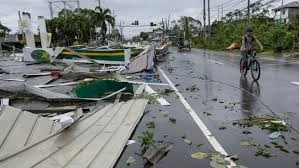
A powerful storm system, Typhoon Fung-wong (known locally as “Uwan”), has wreaked havoc across the Philippines, leaving at least ten people dead and more than 1.4 million displaced. The typhoon made landfall in northern Luzon amid saturated soils from a previous storm, triggering widespread flooding, landslides, and infrastructure disruption.
The national disaster agency reported that the fatalities resulted from landslides, flash floods, exposed electrical wires, and collapsing structures in provinces such as Catanduanes, Eastern Samar, Nueva Vizcaya, Mountain Province, and Ifugao. Emergency shelters and evacuation centres were established as the storm advanced, with around 240,000 people still staying in such centres following the typhoon’s passage.
Authorities noted that this was the 21st storm of the season and it struck just days after another powerful typhoon, Typhoon Kalmaegi, which inflicted heavy damage in the central Philippines. The back-to-back nature of these events worsened the situation, as the soil was already saturated and disaster-response resources were stretched thin.
Thousands of houses were damaged, and major roads and bridges became impassable. Power and communication networks were knocked out in many areas, while schools were forced to close as emergency teams responded to the crisis. Humanitarian agencies, including the World Food Programme (WFP), have scaled up operations by pre-positioning food supplies, providing emergency cash assistance, and restoring logistics and communications support for government efforts to reach isolated communities across 14 affected provinces.
Rescue operations are continuing, but recovery experts caution that restoring essential infrastructure such as roads, power, and water could take weeks due to the mountainous terrain and several towns being cut off by landslides. The Philippine government has declared a state of national calamity in response to the twin storms, acknowledging the widespread scale of destruction and displacement that requires urgent coordination and funding.
Typhoon Fung-wong’s devastation across northern Luzon underscores the Philippines’ vulnerability to tropical storms and the compounding effects of successive disasters. With at least ten lives lost, over a million displaced, and infrastructure under severe strain, the nation now faces a long road to recovery—clearing debris, restoring basic services, rebuilding homes, and supporting affected communities. As climate change continues to intensify storm activity in the region, strengthening disaster-management systems and ensuring sustained international support will be critical in mitigating future damage and saving lives.

