
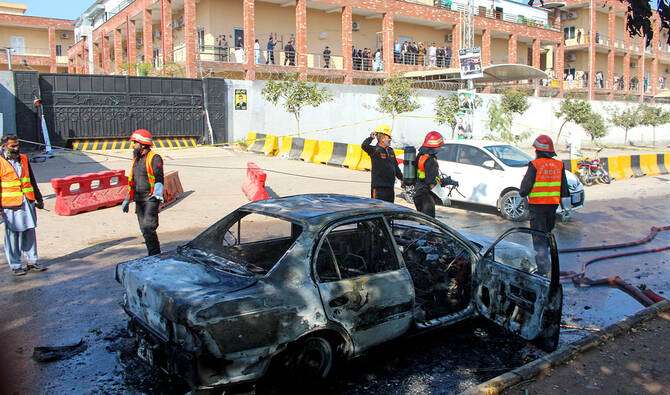
A devastating suicide bombing rocked the heart of Pakistan’s capital on Tuesday, November 11, 2025, when a lone attacker detonated explosives outside the district judicial complex in Islamabad, killing at least 12 people and injuring more than 20 others. The blast, which occurred near a police vehicle at the crowded entrance of the court building, has triggered a large-scale investigation and reopened urgent questions about the security environment in the country’s most heavily guarded zones.
The attack struck at approximately 12:30 pm local time in the G-11 sector of Islamabad, where crowds of litigants, lawyers, and staff were present for court business. According to authorities, the bomber first attempted to enter the court premises on foot and, failing to proceed further, detonated the device close to a parked police vehicle. Witnesses described chaotic scenes of destruction, blood-covered bodies, and a surge of ambulances arriving at the site.
In response, Pakistan’s Defence Minister Khawaja Asif declared the country to be in a “state of war,” calling the attack a wake-up call that the militant threat is no longer confined to remote border zones. The government immediately launched a full-scale investigation, cordoned off the complex, and began forensic sweeps of the scene. Security forces have also intensified patrols across the capital to prevent further incidents.
While no single group has been definitively confirmed by authorities at the time of reporting, a breakaway faction of the Tehrik-e-Taliban Pakistan (TTP), known as Jamaat-ul-Ahrar, claimed responsibility. The group stated that their targets were judges, lawyers, and officials enforcing “un-Islamic laws.” Meanwhile, Islamabad has accused elements based in Afghanistan and India of facilitating militant action, further heightening regional tensions.
The timing of the attack adds to its strategic significance. Islamabad, typically considered one of Pakistan’s safest urban centers, has now been exposed to the kind of violence more commonly seen in conflict-prone border regions. The judicial complex lies close to major government institutions and diplomatic zones, amplifying the symbolic impact of the strike. Analysts say the progression of such attacks into the capital underscores the militant insurgency’s renewed capabilities and Pakistan’s growing security challenges in the post-2021 regional context.
The government’s previous negotiations with the Afghan Taliban and ongoing cross-border tensions have already strained Islamabad’s internal stability. This latest attack, targeting the justice system itself, represents a direct assault on the state’s authority and institutions. It also raises concerns about the resurgence of extremist networks that had been weakened in recent years by military operations.
The suicide bombing outside the Islamabad district court marks a stark escalation in Pakistan’s domestic security crisis—combining symbolic targeting of legal institutions, bold execution in the heart of the capital, and broader geopolitical undercurrents. With at least 12 dead and dozens wounded, the incident has prompted Pakistan to reframe its counterterrorism strategy, hinting at renewed military and diplomatic responses. The implications extend beyond the immediate casualties: the attack challenges Pakistan’s narrative of containment, raises questions about intelligence coordination, and is likely to impact its relations with neighboring states. As investigations proceed, the ultimate test for Islamabad will be whether it can translate this tragedy into sustained action that restores confidence and curbs the expanding militant threat.

