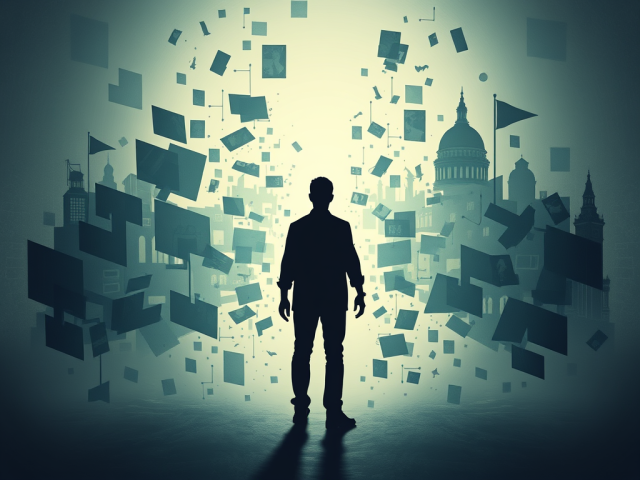
Implicit biases are natural, unconscious connections that shape our thoughts and behaviors without our awareness. Today, they are one of the most prevalent but hardest problems to figure out. People can see and deal with visible prejudices, but implicit biases are hidden and affect everything from job choices to everyday social interactions without anybody knowing it. Recent research and actual events have illuminated this subject, illustrating how these hidden cognitive shortcuts can sustain injustice and compromise the integrity of the legal system. Neuroscientists and psychologists are starting to study how biases we don’t aware we have affect what we do and how we might be able to decrease their effects. There is a lot of material on this site on the science behind hidden biases, examples of them, and how they effect society. It talks about why it’s important to deal with them so that the world might be a fairer place as it becomes more linked.
Finding out what science says about prejudices that aren’t clear
Implicit bias is the brain’s ability to quickly sort through a lot of information. Cognitive psychologists claim that implicit biases are ideas or attitudes that change how we think, act, and make decisions without us even knowing it. These prejudices come from being constantly exposed to the same cultural stories, media portrayals, and personal experiences. This helps kids recall things that are all connected.
Harvard University’s Project Implicit has looked at more than 20 million people from all across the world since 1998. One of the tests is the Implicit Association Test (IAT). The IAT tests how quickly people react to pairs of ideas, like “dangerous” and “safe” or “black faces.” People don’t always know what they want, which is what this says. Results consistently indicate that 70-80% of test subjects exhibit some degree of unconscious bias, even among persons who oppose discrimination. A meta-analysis published in the Journal of Personality and Social Psychology in 2023 examined 500 studies and determined that implicit biases exert a moderate influence on behavior, especially in high-stakes contexts such as police or hospital triage.
Neuroimaging studies clarify this phenomena. Functional MRI scans demonstrate that the amygdala, which governs fear, is more active when people gaze at faces that aren’t in their social group. That’s why people don’t consider about threats before they do something. This evolutionary relic, formerly beneficial for survival, is now seen in modern environments without previous organization. Mahzarin Banaji, a well-known expert on implicit social cognition, says that these prejudices are not bad values but things that everyone believes. In her TED Talk, Banaji adds, “We all have biases.”She says that the first step in getting rid of bias is to admit that it exists.
Implicit biases activate automatically within milliseconds, bypassing rational deliberation; they remain imperceptible to the individual, as individuals often deny their existence due to the weak correlation between self-reports and IAT scores; and they resist modification, unlike explicit attitudes that can be more readily altered through education or willpower.
These features indicate how people might act differently without even realizing it because of unconscious biases. This makes life more interesting.
People’s actions are substantially affected by implicit biases, which can have real-world implications. For example, in schools and courts: They make it hard to find and hire fresh employees. The National Bureau of Economic Research looked into resume audits in 2024 and found that resumes with “white-sounding” names got 25% more responses than those with “ethnic-sounding” names. Managers don’t know that they prefer people who are like them, therefore they naturally choose people who are like them.
Similar patterns are observable in education. A research in the American Educational Research Journal found that teachers have hidden prejudices against pupils from minority groups. Teachers were harder on Black and Hispanic students who did the same things wrong than on white students because they assumed that having darker skin made persons more disruptive. One of the phases that leads from school to prison is this “discipline gap.” It shows that what people do makes things worse.
Healthcare is a wonderful example. Doctors don’t treat Black patients’ pain as well as they should because they think there are biological distinctions. The Association of American Medical Colleges ran a poll in 2022 and found that 40% of doctors had these kinds of biases on the IAT. This is because black patients who had to have unpleasant procedures got fewer prescriptions for painkillers. It was harder to talk to people who weren’t sure if they wanted to acquire the COVID-19 vaccine because public health efforts concentrated on the majority without meaning to.
The police have a lot of power. A lot of individuals learned about how cops are biased without even recognizing it after George Floyd died in 2020. The Stanford Open Policing Project looked at more than 100 million traffic stops and found that Black drivers are stopped 20% more often and searched 2 to 3 times more often than white drivers, even if they don’t find as much illegal drugs. When cops equate being Black to being dangerous without wanting to, they demonstrate “shooter bias.” When people see Black faces in the lab, they are more likely to think that tools are firearms.
You might also see these changes in how people deal with businesses. Researchers have shown that persons of color who buy at establishments are scrutinized more intently, and loss-prevention algorithms make cashiers even more suspicious. All of these little things pile up and hurt trust and chances.
Famous Examples of How Unconscious Influence Works
People’s hidden prejudices might cause them to do things they don’t even know they’re doing, as shown in real life. In 2019, the Operation Varsity Blues case about college admissions fraud indicated that there were class-based prejudices that favored legacy candidates, who were mostly white and privileged, over candidates from other backgrounds with strong academic records. Admissions officers, who naturally liked “cultural fits,” kept things the same.
The presidential campaigns of 2024 showed that there are hidden biases against women in politics. Some people thought Kamala Harris and other women running for office were too forceful and had a poor voice. Women want these traits in a guy. Pew Research looked into language and found that the media talked more about how women appeared than what they stood for. People believe that only men can be in command.
What this means for everyone and what they should do next
People don’t know that their unconscious biases affect how they act, which makes it harder for meritocracy and social cohesion to work. McKinsey’s 2024 diversity study says that the U.S. loses $16 trillion in output because of variations in diversity. When cultures change, hate crimes go up, which makes people feel more alone.
But things are getting better. The goal of ethics in AI is to build tools that enable people make choices that are fair and don’t give one group an advantage over another. The #ImplicitBiasChallenge and other social media efforts are also working to spread the news. Policymakers want more and more information, such as how to train judges and make sure there are a good mix of people in the boardroom.
Unseen biases that change what we do and decide without our understanding it