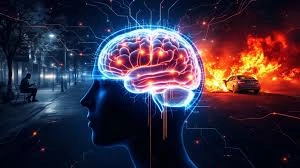
We remember emotional experiences quite clearly, while everyday events tend to disappear from our memory. This phenomena, in which people remember emotionally charged material better than neutral information, gives us a lot of information about how the brain works and has fascinated neuroscientists for decades.
The Science of Why Emotional Memory Works Better
Studies consistently demonstrate that emotional arousal facilitates memory development. Studies employing brain imaging in humans demonstrate that the amygdala has increased activity during emotional events relative to neutral ones. This improves memory for specific events. The amygdala, which is a key part of the brain that deals with emotions, works with the hippocampus, which is the brain’s memory center, to make sure these experiences last longer.
This bias happens because emotional cues generate physiological changes, including the release of hormones, that make brain connections stronger. Studies indicate that emotional stimuli are identified alongside neutral stimuli immediately post-encoding. But emotional memories last longer after 24 hours. You might remember things better whether you’re happy or sad. One EEG study found that people remembered 56% of numbers after positive stimuli, 42% after negative stimuli, and just 28% after neutral stimuli.
Neural Mechanisms in Action
The amygdala is a very important part of this process. Activation changes how memories are stored in different parts of the brain, making emotionally important information stand out more. High-frequency brain waves that connect the amygdala and hippocampus help people recall things that are emotional better. But things like depression or electrical stimulation can make this worse.
Recent research shows how vital it is for all parts of the brain to function together while encoding emotions. Researchers used fMRI in story settings and found that emotional arousal helps brain networks work together, like an orchestra getting its sections to play together for a long time. There might be slight variations between men and women, with men exhibiting a more robust right amygdala and women a more pronounced left amygdala in relation to emotional content.
Over time, emotional memories fade more slowly. They help you recall significant things instead of less important ones by connecting the amygdala and hippocampus.
Flashbulb Memories: Very Clear
Flashbulb recollections are an excellent example of this since they maintain very distinct memories of amazing things that happened. Brown and Kulik came up with the term “now-printing” to describe the process by which surprise and consequence go beyond certain limits, leaving a lasting mark on the brain. People can remember exactly where they were on 9/11 or other tragic events, but not necessarily perfectly.
Studies that look at different cultures demonstrate differences. those from the UK and US remember more of these kinds of things than those from Turkey or China do. This is because they were more involved and connected with them. A 2025 study utilizing the Flashbulb Memory Checklist indicated that real recollections of terrible things were more likely to be true (mean 20.87) than made-up memories (18.29). This helped us locate the truth more easily.
Facts & Figures from the Real World
Empirical data highlights the inconsistency. In a unique fMRI investigation, amygdala activation during encoding forecasted enhanced long-term memory for emotional images compared to neutral ones. Emotional enhancement endures over time: short-term equivalence transforms into emotional superiority after 24 hours.
Retention rates can increase by a factor of two for emotional content compared to neutral knowledge. Emotional arousal interacts with priority, enhancing the accuracy of previously high-priority neutral memories (71% for negative memories versus 64% for neutral memories) while diminishing the accuracy of low-priority items. These patterns persist across positive and negative valence, intensified by global brain cohesiveness during learning.
Examples from everyday life that show the phenomena
Think of weddings: Guests remember the vows, but they forget the monotonous speeches. Or national shocks like assassinations that make people remember things that happened decades ago.
Disagreements stick with you in real life, but normal conversations don’t. People with PTSD go over events one frame at a time, which shows how it affects them. On the other hand, good peaks, like a child’s first steps, last forever.
This is something that marketers utilize to their advantage: advertising that make people feel something help them remember the company better. Teachers use both stories and facts to help kids remember things.
Many places in the real world use it
This bias transforms whole fields when you understand it. Stories that make you feel something help you learn in school, and linking ideas with arousal helps you remember them. Neuromarketing uses it in commercials to get people to click and remember by utilizing words that make them feel something.
It’s a significant thing for therapy. It can assist to remember good things to forget negative things when you have PTSD. Studies on sleep reveal that bringing back emotional memories during slow-wave and REM sleep helps memories remain better than bringing back neutral memories.
It is used in court: Eyewitnesses are more sure of what they saw in crimes of passion, although their accuracy varies. Marketers say that things that make you feel good help you remember things.
Effects on the totality of society
This memory bias has a big effect on how people act. It explains why disasters bring countries together through shared flashbulbs, which makes them stronger. But it could offer you misleading information because fabricated powerful emotional memories feel real.
It’s too much to utilize emotional memory counters in 2026, when mental health problems like “brain rot” are getting worse. People are scared about AI psychosis because we rely too much on impartial information. Adding emotions to technology might make it more like a person.
Problems and Limitations
Not perfect—emotional memories change with time, so the essential idea comes before the facts. Arousal enhances task-relevant knowledge while impairing irrelevant information. In different cultures, things work differently.
Future Research Directions
New research is looking into how sleep reactivation might improve mood and how graph theory can help link networks. People who are becoming older or have been hurt can seek relief through stimulation in clinical studies. By 2026, wearables will be able to work with other devices to improve things in real time.
This cognitive quirk—people remember emotionally charged content better than neutral information—shapes our tale identities and reminds us to be aware of our feelings in a world full of them.
How the brain can recall things that are very clear: why emotional memories endure longer than neutral ones