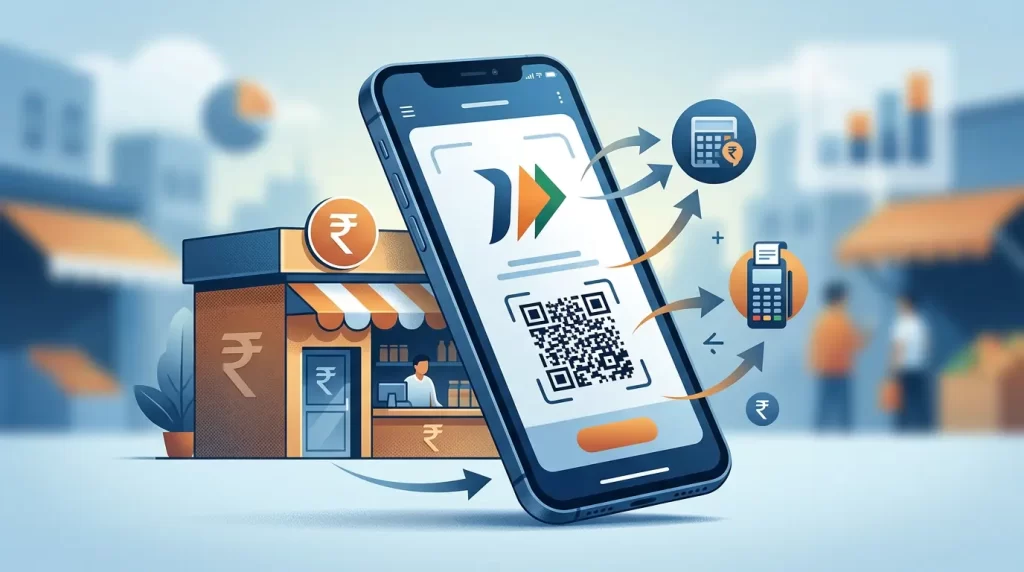
If you’ve paid for groceries, chai or a cab with a quick QR scan in the last six years, you’ve probably never thought about who pays for that payment to go through. From today, October 15, that question matters a bit more. UPI charges are no longer zero for everyone, because a merchant discount rate (MDR) has officially begun on certain payments.
I read through the NPCI framework and the coverage around it. The change is smaller than the headlines suggest, but it is real.
So, what exactly has changed?
For roughly six years, accepting UPI cost merchants nothing. That has now ended for a specific slice of transactions.
Eligible person-to-merchant (P2M) payments above ₹2,000 now attract a 0.4% UPI MDR. For payments of ₹75,000 and above, the fee is capped at ₹300. Some examples:
A ₹2,000 payment: ₹0. The fee applies only to amounts above ₹2,000.
A ₹3,000 payment: ₹12.
A ₹50,000 payment: ₹200.
A ₹75,000 payment or more: ₹300, no matter how large the amount.
Certain sectors get a different deal. Railways, telecom, insurance, fuel and agricultural inputs pay a flat ₹5 per transaction on payments above ₹2,000, instead of the percentage.
Do customers pay anything extra?
No. The NPCI merchant fee is charged to the merchant side only. Person-to-person transfers stay free regardless of the amount. Reports say UPI apps are also barred from adding a platform fee on these payments, and merchants can’t pass the MDR on to you as a surcharge. If a shopkeeper asks for an extra 0.4% for paying by UPI, that isn’t how the framework is meant to work.
Who gets protected?
The small shopkeeper, mostly. Micro merchants receiving up to ₹1 lakh a month through UPI QR codes stay at zero fee. That covers the corner kirana, the vegetable vendor and the tea stall, which are the businesses that made digital payments in India a daily habit in the first place.
NPCI’s FAQ also says over 95% of P2M payments by volume fall below ₹2,000. For most people and most shops, nothing changes at checkout today.
The catch: volume versus value
That 95% figure needs context, because volume and value tell different stories. One analyst estimate says payments above ₹2,000 make up only about 4% of P2M volume, but a much larger share of the money, around two-thirds by value. So a small number of transactions carries most of the rupees, and that is where the fee bites.
For a mid-sized business, such as an electronics shop, a jeweller, a furniture store or a clinic billing larger amounts, this is no rounding error. A shop that does ₹10 lakh a month in UPI sales through large tickets could see a few thousand rupees in monthly costs. That is manageable, but it cuts into thin margins, especially where UPI had replaced cash or cards precisely because it was free.
Why now?
The argument for the MDR is about sustainability. UPI handles an enormous volume. Reports put it at about 24.5 billion transactions in August 2026 alone. Running that infrastructure takes money for security, uptime, banks, app providers and fraud prevention, and zero revenue at the merchant end has long been called unsustainable by the industry. The government has also stressed that the MDR is not a tax and that neither the government nor NPCI keeps the money. It is shared among the ecosystem players.
The announcement also says 5% of collections will go into a fund to expand UPI acceptance among small merchants. I couldn’t confirm that detail in every source I checked, so treat it as part of the stated plan rather than a settled mechanism. If it works as described, the fee on bigger payments partly pays for bringing smaller merchants online.
What should merchants do right now?
If you run a business, a few practical steps are worth taking this week:
Check your category. Are you a micro merchant under the ₹1 lakh QR threshold, a regular merchant, or in a flat-fee sector? Your cost depends on this.
Look at your ticket size. If most of your sales are under ₹2,000, you’ll barely notice the change.
Don’t surcharge customers. It isn’t permitted under the framework and it can hurt your reputation.
Review your pricing and margins. If you sell high-value items, work the 0.4% into your costs rather than being surprised at month-end.
Ask your bank or payment provider how and when the MDR will appear in your settlements.
And what about everyday users?
Keep paying the way you always have. Your daily UPI spending on food, fuel, bills and small purchases is largely untouched. The one thing to watch is a merchant nudging you toward cash or card for large purchases to dodge the fee. That’s their choice, but UPI payments themselves remain free for you.
The bigger picture
The question I keep coming back to is whether this changes behaviour. Free UPI built trust and habit. A small fee on larger payments could push some bigger merchants back toward cards, bank transfers or cash, or it could be absorbed quietly and forgotten, the way card fees were. The ₹300 cap and the sector-specific ₹5 flat rate suggest regulators tried to keep the impact light where it would hurt most.
The next few months of data will show whether this was a gentle course correction or the start of something heavier. For today, the headline is simple. UPI is still free for you, still free for the smallest shops, and now has a modest price tag on the bigger payments.
Quick recap: The UPI MDR begins October 15. It is 0.4% on eligible P2M payments above ₹2,000, capped at ₹300, with zero fee for micro merchants under ₹1 lakh a month and no extra cost for customers.
UPI MDR Kicks In Today: What the New NPCI Merchant Fee Means for You.