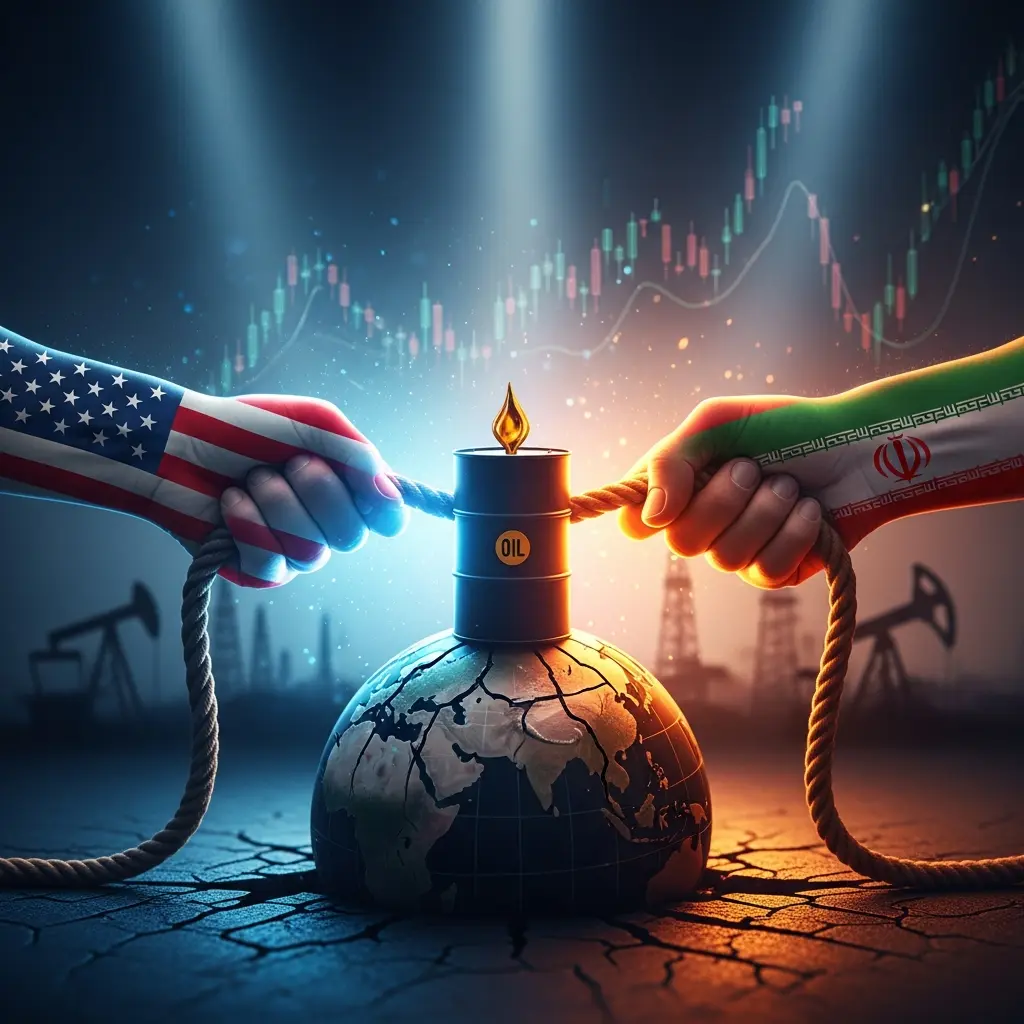
Rising tensions between Washington and Tehran are rippling far beyond the Middle East — and the world’s most critical oil corridor is caught in the crossfire.
There is a stretch of water in the Persian Gulf, barely 21 miles wide at its narrowest point, that the world cannot afford to ignore. Every single day, roughly 17 to 21 million barrels of crude oil pass through the Strait of Hormuz — the jugular vein of global energy supply. Right now, that vein is under serious threat, and the consequences are being felt from fuel stations in Mumbai to boardrooms in New York.
The long-running conflict between the US and Iran, which has been brewing for decades but is now dangerously close to boiling over, has led to what analysts are calling one of the most unstable energy crises in recent memory. The chaos has affected almost 20% of oil shipments around the world, and the effects of this oil crisis are changing economies that have only just begun to recover from years of pandemic recovery.
A Chokepoint That the Whole World Needs
You need to know about the Strait of Hormuz to understand why this is so important. Not only is it an important shipping lane, but it is also the most strategically important stretch of ocean on Earth. Iran is on one side, and Oman and the UAE are on the other. Oil from Saudi Arabia, Iraq, Kuwait, the UAE, Bahrain, and Qatar flows through this narrow passage. If you close this passage, even for a short time, the world’s energy supply will be severely affected right away.
Iran is aware of this. For a long time, it has used the Strait of Hormuz as its most powerful bargaining tool in geopolitical standoffs. The growing military tension between Tehran and Washington has once again put that tool on the table. Iranian navy ships have been practicing near the strait, and US warships are still a big part of the area. There are still diplomatic efforts going on, but the gap between the two sides is still very big, and there is a real risk that one mistake could lead to a major incident.
Prices of oil go up, and regular people have to pay for it.
Markets have reacted quickly and harshly.
This is especially scary for countries that rely heavily on oil imports. Indian leaders are in a tough spot. The country has always had good relations with Iran, but because it is a strategic partner of the United States, it has to be careful about which side it picks—or, more likely, which side it doesn’t pick at all.
Concerns about global inflation are back on the table.
The timing of this moment is what makes it especially scary for economists. For the past two years, a lot of the world has been slowly getting back to normal after high inflation caused by the pandemic and the economic effects of Russia’s war in Ukraine. Central banks raised interest rates a lot. People cut back. Slowly, and with a lot of pain, prices started to go down.
Analysts now say that if the Middle East stays unstable for a long time, a lot of that progress could be lost. Energy supply is the most basic part of almost every good and service in the modern economy. Inflation doesn’t just creep back when it gets expensive and unreliable; it roars. Global tensions like these can turn years of economic growth into months of decline, and the warning signs are already flashing.One senior energy analyst recently said, “If the Strait of Hormuz is blocked for a long time, we are not looking at a temporary price spike.” In the near future, we will see a major change in how the world economy works.
Diplomacy is trying, but it’s not doing very well.
There are still diplomatic efforts going on behind the scenes. In the hopes that cooler heads will prevail before things get too dangerous, back-channel negotiations, third-party mediators, and multilateral frameworks are all being used. European countries, who have always been involved in US-Iran relations, have been working hard to keep the lines of communication open. The Gulf Arab states, which stand to lose the most if oil flows through the Strait are interrupted, have been quietly calling for things to calm down.
But the military show goes on. Every time a fleet moves, every time Washington or Tehran makes a pointed statement, and every time there are new sanctions or threats of retaliation, the diplomatic space gets a little smaller and a little more fragile. History shows that crises like this can end quickly, but they can also get worse very quickly when political pressures at home make leaders want to fight instead of compromise.
What Happens Next and What the World Is Looking For
Right now, the world is keeping a close eye on three things. First, can diplomatic channels create enough room for tensions to ease before a military incident happens? Second, if OPEC and other big producers can make up for any supply problems by increasing production in fields that aren’t affected by the conflict. And third, if global financial markets, which are always wary of geopolitical risk, start to factor in a longer, more damaging crisis than traders expect.
The geopolitics of the Strait of Hormuz can seem far away and abstract to regular people, like the Indian family watching fuel prices rise, the European small business owner watching logistics costs rise, or the American driver staring at the pump. But the link between global tensions and the cost of living has never been clearer. A narrow strip of water halfway around the world connects all of the world’s economies. Right now, that strip of water is anything but calm.