
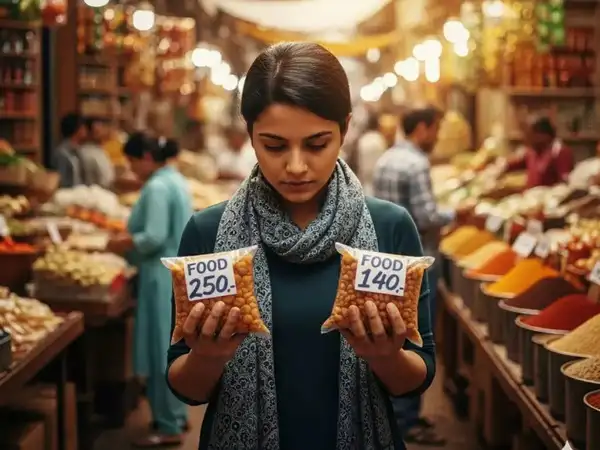
The fact that food prices are going up in India is a big problem. It makes it hard for families to make ends meet and makes people in both cities and the country worry about the economy. A lot of households in cities like Pune can’t afford the goods they need every day.
Prices for basic goods like cereals, vegetables, and dairy have gone up, making it hard for millions of Indian families to buy food. The cost of living is going up because of problems with the supply chain, climate change, and other factors. It puts the economy and food security at risk. As people have less extra money, governments and consumers need to be extra watchful about food prices going up.
What Caused It
Food prices are going up quickly because of a variety of different things that are all connected. Long monsoons and droughts in crucial farming areas are instances of odd weather patterns that have caused the production of essential crops like onions, tomatoes, and lentils to plummet. Vegetable production dropped by 20–30% last year because Maharashtra and Karnataka didn’t get enough rain. This made it exceedingly hard to get things from one place to another.Prices for products all throughout the world are always going up and down, which makes the problem worse. For example, wars and trade troubles in other parts of the world make food oils and grains from other countries more expensive. Farmers have to pay more for goods like workers, gas, and fertilizer. subsequently they pass these costs on to their customers, who subsequently pass them on to stores. About 40% of the food goes bad after the harvest because it is not stored or moved well. This makes the problem worse because it’s tougher to find when there are a lot of others who want it.
How it affects families’ budgets
People in India who make less than average or average money have a hard time when prices go up since they spend 40–50% of their monthly income on food.A family of four in big cities like Pune and Mumbai now has to spend an extra ₹2,000–3,000 on groceries every month. This makes it hard for people to buy the things they want and takes money out of their savings.
For families who live in rural areas, it’s much harder because small farmers raise and eat these foods. Research from all throughout the country shows that food prices climb 5–7% more than salaries every year.This has made things worse for people who are already poor and driven more families into poverty. The most affected are women and children. Children are more likely to be malnourished if they skip meals or choose cheaper, less healthy ones. 35% of kids under five are not getting enough food right now.There are several parts of India
Prices go up a lot in some places, and Maharashtra has some of the highest jumps. Because there aren’t enough onions in Pune, the price has gone up to ₹80–100 per kg. Tomatoes are still around ₹60–70 per kilo. In northern states like Uttar Pradesh and Bihar, prices for wheat and rice are going up because they can’t get enough of them.Tamil Nadu and Kerala in the south are having trouble since the cost of rice and coconuts have gone up 25% since the cyclone.The price of arhar dal has gone up to ₹200 per kg because West Bengal and other eastern districts are running out of pulses. These diverse levels of pressure indicate how crucial it is to do something in a lot of different areas. This is especially true because people in Pune report their shopping bills have gone up by 12%.
What the government does and what it says it will do
The government has set curbs on exports to make sure there is enough rice and onions in the country. The minimum support prices for most things went hiked by 7% to 10%. This was wonderful for farmers, but it also made prices go up on the market.More than 110 million farmers get ₹6,000 a year from cash transfers and fertilizer subsidies.
Some folks think these steps aren’t enough. The Essential Commodities Act has been revised to make it easier for private companies to invest in storage, although the changes don’t have a big effect yet. The Price Stabilisation Fund has ran out of extra inventories, but retail relief is still behind. In early 2026, the government gave ₹1 lakh crore to improve the cold chain so that problems that keep coming up can be fixed.What Experts Think and Analyze Economists predict that India’s objective of 7% GDP growth could be damaged if food costs go up by more than 8%. “We need more modern supply chains and practices that can handle changes in the weather to make things less unstable,” says Dr. Ashok Gulati, a specialist on farming. Nutritionists are worried about the trend toward ultra-processed foods since they make obesity worse when people don’t eat enough calories.
Reliance and other big stores aim to employ technology to get rid of middlemen, which may lower prices by 15%. Two strategies to make farms more resistant to harsh weather are to grow a variety of crops and use precision farming.
Ways for people to deal with
while families buy a lot of things while costs are low, cultivate their own food, and pick products that are in season and grown nearby, their lives change.People in Pune can use apps that keep track of costs to find out when the ideal time is to go shopping. You can save 20% to 30% by going straight to farms with cooperatives and farmer groups.
- Make sure rice and millet are at the top of your list of meals you consume every day, and change them up a bit.
- To avoid paying more for shipping, buy your food from local farmers or weekly markets.
-Use pickling and other techniques to keep goods from going bad.PDS rations and ONORC cards can help you get what you need for less money.
These techniques work for a while, but they also show how the system isn’t perfect.
How it affects the economy as a whole
Core inflation is going up because food prices are increasing up. The Reserve Bank maintains interest rates high and GDP growth slow because of this. Manufacturing and services both suffer when workers don’t get adequate food.When prices go up in India, Indian agricultural exports lose their edge over other countries.
The budget is getting tighter since there are more subsidies and less money for building things. Voters care most about the cost of food, and these costs affect elections and what politicians want to do.

