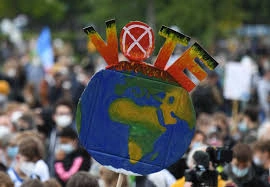
Climate emergencies, such as massive floods and devastating fires, are emerging as the principal issues in global politics. Every country has changed what people care about and how elections work. These events make calls for action on climate change stronger, which has a big impact on campaigns and policy agendas.
More and more individuals are voting on issues related to climate change.
People who vote are beginning to believe that climate change is a major issue that has to be addressed immediately by those in charge. Right now, this is a significant problem in elections. During the 2024 global super-cycle of elections, natural disasters like floods, heat waves, and wildfires influenced at least 23 elections in 18 nations. These things hurt a lot of people and made climate change worse. Polls show that Democrats and Republicans don’t agree on a lot of things: Fifty-nine percent of Democrats feel we need to do something about climate change, but only twelve percent of Republicans agree. This affects the number of people who vote and the number of people who alter their views. This change is based on what happens in the real world. It’s harder to vote when the weather is poor, yet more people do vote when the weather is bad. For instance, the floods and heat in India changed how many people voted in the 2024 general elections.
Problems with the procedure of voting
If there are natural disasters, it can be hard to set up elections. This shows how fragile democracy is since it makes things take longer and changes how they are done. The Election Commission of Pakistan moved by-elections in nine districts to September 2025 because floods damaged polling stations and other places. That meant that resources had to be relocated to help with the rescue. People in the southeastern US had a hard time voting in 2024 because of hurricanes Helene and Milton. The flood killed those who were working at the polls in Missouri on election day. There have been a lot of floods in Rio Grande do Sul, Brazil. The worst one was in June 2025, when approximately 7,000 people had to leave their homes. This was like the disaster that killed 181 people in 2024. It also tested the government before the next election. These interruptions sometimes give the individuals in charge time to get the help they need to deal with situations, which could affect the outcome. For instance, earthquakes in Italy made it more probable that mayors would win re-election.
Because of the floods in Germany in 2021 that killed more than 180 people, climate change was the most prominent issue in the campaign. The Greens didn’t win, but this was still a good thing for them. Floods didn’t directly affect more than 10% of the votes in Austria’s 2024 election, but they did show how important it is to be willing to change. The Labour Party won the UK election in 2024 because 83% of the people who voted for them thought climate change was essential. The Greens and the Liberal Democrats were pleased with this.
Asia-Pacific: Heat, Floods, and Calls for Action
In the 2025 Australian federal election, plans that didn’t make it obvious how climate change would affect things were not adopted. The Labour Party wanted to convert from fossil fuels to renewable energy. This would cut emissions by 75% by 2030. The number of votes for environmental independents went up by 3.8%. It was too hot for anyone in India to vote in the 2024 marathon elections. Farmers wanted the elections to be rescheduled because they were losing money.
Many places are changing a lot. Recent weather disasters have made elections much worse and made people all over the world think twice about voting. People in Europe were even more scared of climate change after the floods in Germany in 2021. The Green parties didn’t win, but they did garner more votes. In the 2025 elections, Australians voted against denialism, which made the Labour Party make large promises. In 2024, storms and heat waves in the US and India made it hard for members of parliament to do their jobs and stopped people in rural areas from voting. This helped candidates who were good at working with farmers a lot of the time. The long delay for Pakistan’s 2025 by polls because of the floods shows how bad South Asia’s infrastructure is. People in southern Brazil don’t trust the government since it floods too often.
Changing what political parties want to do and how they want to do it. Some political parties are starting to include climate change resilience in their platforms. They are making promises to do something about it instead of just talking about it. Portugal’s manifestos talked more on climate change from 2019 to 2024. This is what happened all over the world after Cyclone Idai hit Malawi in 2019.Extreme weather events make people who are more likely to vote 1–2% more likely to do so. People who care about the environment will be quite happy to hear this.For instance, when landslides happen in Colombia, the people in charge exploit disaster relief to get votes.
In many parts of the world, democracy is changing a lot. When climate disasters don’t get better, people lose faith. Because of this, people look for better ways to vote, such using backup voting machines after the California incident. When disasters happen, they cost billions of dollars, which makes budgets tighter and makes people upset when they think polls are unfair. The tariffs the US put in place and everything else that happened while Trump was president will have an effect on world politics in 2025. These changes are putting alliances to the test since smaller countries are doing better than bigger ones.
Why climate emergencies are now having an effect on elections around the world