Introduction — why this moment matters now
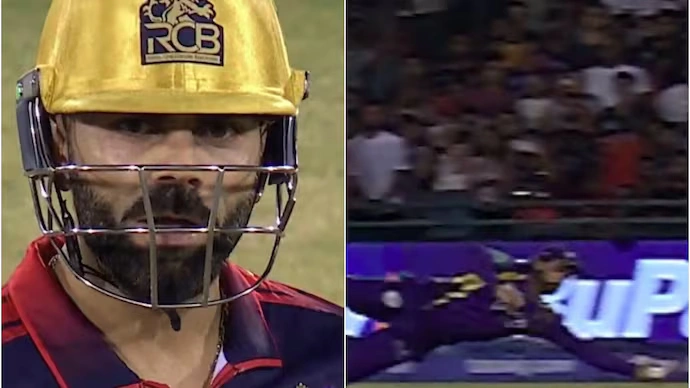
A split-second act of athleticism on a bright evening in the IPL has done what good sport always does: it stopped people mid-scroll, rewired highlights reels and sparked debate across living rooms and timelines. Manish Pandey’s mid-air, left‑handed catch to dismiss Tim David during the Royal Challengers Bengaluru (RCB) versus Kolkata Knight Riders (KKR) match has fast become the defining image of this IPL cycle, not just for its sheer improbability but because even Virat Kohli — the sport’s most photographed expression of competitive fire — looked genuinely stunned. The catch matters because it rewrites a small piece of the game’s narrative: fielding, once the underappreciated sibling of batting and bowling, is now headline material, capable of turning tides and making instant legends out of veterans and journeymen alike.
A moment in detail: what happened on the field
The wicket fell in a heartbeat. Tim David had lofted his bat and found the gap; the ball was traveling toward the point region with what seemed like a near-certain boundary. Pandey, stationed at point, read the line and launched himself leftwards, horizontal to the turf, his body stretched at full extension. In mid-air he pulled the ball from above head height with his left hand — fingers under the seam — then completed the fall and the secure hold as the crowd oscillated between disbelief and roar. The on-field umpires referred to the third umpire briefly for a finger-check and the out signal followed. Television replays, slowed to a frame-by-frame reverie, showed the point of contact and the impossibility of the act; social clips fast-forwarded across platforms, racking up millions of views within hours.
Why Virat Kohli’s reaction made the highlight go global
It’s one thing for a spectacular catch to trend; it’s another when a rival captain with global recognition reacts the way Kohli did. Kohli’s visible surprise — a hand to the mouth, a half-step pause, then an instinctive clap — served as a live verification of the catch’s gravity. When elite athletes show human astonishment, audiences sit up; the moment gains authority. For Indian viewers, Kohli’s expression was a shorthand that said, “I didn’t see that coming either.” That reaction gave international feeds a second story angle: this was not just a highlight, it was a moment even the game’s fiercest competitors admired. The clip spread across social media, picked up by fan pages, sports channels and international cricket handles; many commentators labeled the grab a “worldie” and immediately pitched it into discussions about the greatest IPL catches.
The ripple effects on the match and team dynamics
Practically, the dismissal removed a dangerous hitter who could have accelerated the chase, snapping a potential momentum shift toward RCB. Psychologically, such a catch does more than change a scoreboard: it energizes the fielding side and sows doubt in the opposition’s mind. For KKR, Pandey’s effort reinforced a message that every run saved matters as much as runs scored; for RCB, it was the kind of blow that can fluster even seasoned batsmen for the next few overs. Momentum swings are subtle in T20 — a brilliant save here, an overthrow there — but a catch of this nature collapses a phase in an instant. Coaches and analysts will point to the timing: early wickets of aggressive hitters compress the scoring plan, forcing teams to rebuild innings rather than unleash at will.
Fielding as a headline — an evolution in cricketing priorities
Pandey’s catch is emblematic of a broader shift: fielding is no longer a footnote. IPL franchises invest heavily in athleticism, field drills and specialist coaches; teams that thrive on boundaries and powerplay scores now rely on razor-sharp fielding to scrape runs off the board. Years ago, catches like this would have been celebrated but quickly buried under batting talk; today they headline. Why the change? Modern T20 demands marginal gains; saving eight to twelve runs through athletic work can be the difference between a playoff spot and a near-miss. Broadcast teams give such moments cinematic treatment—ultra-slow motion, aerial replays, player-mic snippets—making fielding feel as visceral as a last-ball six. That elevates players like Pandey, who combine experience with a renewed emphasis on movement and anticipation.
Who Manish Pandey is — context that deepens the moment
Pandey is not a newcomer seeking a viral one-off. He’s a seasoned campaigner with a track record that includes domestic consistency, international stints and several influential IPL seasons. That existing credibility deepens the emotional payoff: viewers aren’t just marveling at athleticism; they’re appreciating a player who continues to reinvent his value. For Indian cricket fans — especially those who follow domestic circuits and IPL history — the spectacle becomes layered. A veteran’s excellence on a stage dominated by younger, flashier names reminds audiences that experience combined with preparedness still produces moments of magic.
Social spread and commercial implications
The clip’s virality was immediate. Short-form edits populated Stories, Reels and microvideo timelines; pundits replayed the clip on post-match shows; fan edits added dramatic scores and freeze-frames for emphasis. From a commercial angle, moments like these become monetizable: highlights packages, sponsored reel drops, and branded post-match segments all leverage the emotional spike. There’s marketing value too for franchises — touting team agility, the defensive ethos and player narratives that fuel merchandise sales and fan engagement. For the league, this is gold: memorable moments build long-term brand equity for the IPL as a source of spectacle, drama and human brilliance.
Questions to think about
How much should franchises invest in specialist fielding coaches and conditioning to chase those match-turning saves? And beyond the immediate buzzy thrill, which of these viral moments will endure as part of cricketing lore rather than an ephemeral clip?
Comparisons and historical framing
The IPL has a history of stunning catches — acrobatic mid-wicket dives, boundary-line snatches, one-handed grabs in swirling stadium lights. Yet what sets Pandey’s catch apart is the constellation of factors: the timing in the match, the target being a famed hitter, and an opponent’s visible reaction that confirmed its significance. If we trace back to other landmark grabs, the pattern is similar: the most unforgettable catches happen when athleticism meets narrative pressure. Think of handlers who pull a match back from the brink; those instances become stories told in highlight packages and locker-room lore.
A player’s perspective — effort, instinct and craft
From a fielding craft perspective, the catch combined preparation and pure instinct. Anticipation — reading the bat-face and body movement of the batsman — puts a fielder in the right corridor; footwork and a launch that trusts the body turn a plausible opportunity into a real possibility. Practically, this means Pandey’s catch was less a lucky fluke and more the result of hours of training: catching practice, reaction drills, and the muscle memory that transforms a dive into a secure grip under pressure. That’s a useful reminder: moments that look like magic on TV are often the product of mundane repetition behind the scenes.
The fan and cultural reaction in India and beyond
In India, where cricket is woven into daily conversation, the catch generated instant memes, fan debates and nostalgic callbacks to past fielding heroes. Regional fan groups praised Pandey’s form and relived earlier matches where fielding won games. Internationally, broadcasters used the clip as an example of the IPL’s entertainment value, reinforcing the tournament’s role as a global showcase. For younger viewers — kids learning cricket in neighbourhood nets — the clip becomes aspirational fuel: fielding drills now feel as desirable as power-hitting practice.
What this means for RCB and KKR moving forward
For KKR, the moment is confidence currency: a morale booster that underscores depth in match-winning faculties beyond batting. For RCB, it’s a prompt to shore up middle-order plans and to reflect on how to handle pressure phases when a single athletic play can reset an innings. Strategically, both franchises will study the event to refine placement, communication between fielders and plans for aggressive hitters like Tim David. Coaches will extract technical lessons; players will replay the clip for motivation.
Closing perspective — the human side of the highlight
Sports produces images that cling to the mind: a last-second goal, a buzzer-beater, a miraculous catch. Pandey’s mid-air grab is one such image — dynamic, human and slightly puzzling in the best possible way. It reminds us why people tune in: not just to see runs or to check points tables, but to witness human beings stretch themselves beyond the expected. Moments like this shift conversations from statistics to stories, from analytics to admiration. They also offer a small, shared thrill: for a few seconds we all leaned forward together, watching something improbable become real.
If nothing else, the grab deserves a replay tonight and a place on lists of the IPL’s most memorable moments. It’s a reminder that cricket, in all its modern complexity, still rewards the simple virtues of anticipation, courage and the willingness to fly a little for the team.
Catch of the Season: Manish Pandey’s Gravity-Defying Mid‑Air Grab Stuns Kohli and Sends IPL Into a Frenzy