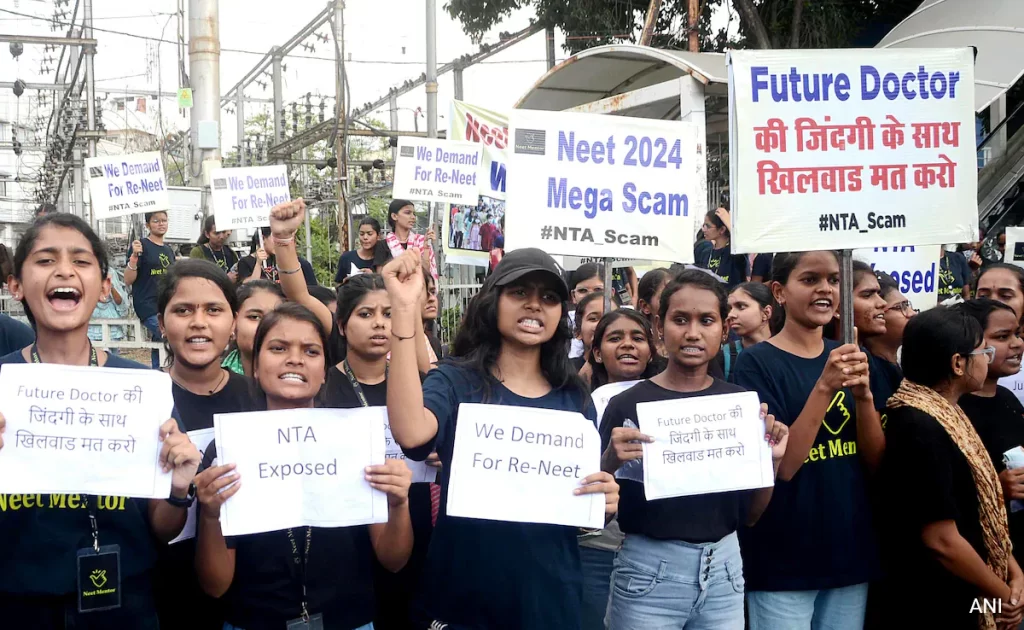
The Central Bureau of Investigation (CBI) on Wednesday arrested five key suspects in the alleged National Eligibility cum Entrance Test (NEET-UG 2026) paper leak, a scandal that has derailed admissions for lakhs of medical aspirants and revived questions about exam security in India. The arrests came after coordinated raids across several states and the cancelation of the NEET exam on May 3, which officials said showed signs of systematic leaking and distribution through a complex network that linked local brokers, coaching intermediates and technology-enabled channels.
Why it matters now:
NEET is the single largest entrance to medical school in India, affecting the fate of over 20 lakh applicants every year. Any erosion of its credibility will send shockwaves across families, coaching institutes and state education systems. The cancellation and following investigation has already sparked protests, frantic calls for accountability, and a federal probe to track how a high-stakes paper got from a sealed package into the hands of those who sold it for lakhs of rupees. For many hopefuls, the problem is not theoretical. Months of preparation, financial sacrifice and emotional involvement are now at stake.
What the CBI claims to have found
The CBI has said that the scheme was multi-layered — comprising suspected procurement, couriering and resale of the question paper through intermediaries and local brokers. The agency said five people were arrested after searches in Jaipur, Gurugram and Nashik, places that authorities believe were key nodes in the distribution chain. During the searches, authorities have allegedly taken digital devices, financial documents and documentation evidence, and teams also visited the National Testing Agency (NTA) headquarters in Delhi to acquire records pertaining to the logistics of the examination.
Those detained and what they are alleged to have done
The five arrested are: Media reports and government briefings said
The Sikar-based family is believed to have bought the paper and sold it on profit. Three people from Jaipur who were connected to purchase-and-resale operations in Rajasthan are also alleged to be involved.
One from Gurugram who is alleged to have links in distribution/facilitation outside Rajasthan.
One of them, a BAMS graduate and practicing doctor, allegedly couriered the question paper into the network first. He was described in reports as an admissions counselor.
Investigators claim the value chain allegedly includes initial procurement, transmission by courier or digital methods, and subsequent sale – sometimes bundled and sold to numerous clients for sums apparently as high as ₹15–30 lakh in media reports. If these data are confirmed in court, they indicate a well structured and profit-driven operation, not an isolated leak.
The technology, and the trickery
Officials say contemporary technology has compounded old misconduct. Investigations indicate the coordinated use of messaging platforms, and possibly private “shadow” servers. Some reports describe portable scanners and fast digital transfer methods that would allow a physical sheet to be converted into shareable formats and quickly disseminated to buyers and handlers. The CBI has seized devices to trace the digital footprint, transaction history, and internet groups involved in the dissemination of the information.
The play-out of the probe
The CBI had taken over the case after complaints were received by education ministry and the National Testing Agency (NTA) regarding irregularities in the May 3 exam. The NTA had cancelled the paper and the federal government had handed over the matter to the CBI for a detailed criminal probe. The first fieldwork led by state police forces, especially the Special Operations Group (SOG) of Rajasthan, provided leads and arrests that fed into the federal probe. The CBI also expanded these inquiries to other states where suspects and evidence were discovered.
Effects on Students and the System
The immediate effects have been brutal. The cancellation of exam will affect admission cycles, possibly delaying acceptance timelines and derailing entrance preparation, leading to uncertainty for students and institutions. There have been many applicants and parents who have voiced their outrage and disbelief by staging rallies in areas of the country seeking quick justice and assurances that future exams will be secure. Coaching institutions that have evolved into an ecosystem surrounding entrance preparations are now facing fresh scrutiny for alleged linkages to malpractice networks.
Policy and procedural deficiencies
Experts and politicians say the affair highlights a number of fundamental weaknesses:
Over reliance on last mile logistics for paper movements therefore creating potential for interception or substitution.
The heavy commercialisation of exam preparation that incentivises black market purchasers.
The ability of small, well-resourced groups to utilize both offline brokers and encrypted digital avenues for distribution.
These vulnerabilities imply that any robust solution will need to be both technical – stronger digital monitoring, secure sealed comms and chain-of-custody systems – and institutional, including stricter vendor audits, improved surveillance of couriering, and heavier fines for middlemen.
What reform would look like
Reformers are advocating for a multi-faceted approach: multi-channel security for exam papers, required real-time tracking of physical consignments, end-to-end digital logging of who accessed materials, and swift forensic analysis capabilities within agencies such as the NTA or independent audit units. Enhanced whistleblower protections and hotlines for exam-day abnormalities might also help close information gaps more quickly than today’s ad-hoc reporting routes.
Legal stakes and the way forward
The arrests are simply the first volley in a prolonged legal process. The CBI’s case will have to prove not only that a paper was leaked, but who was knowingly involved, how they colluded and whether there are bigger, more powerful backers – the “big fish” several of the accused have insisted are out there. Evidence from seized phones, bank transactions, courier manifests and witness testimony will be key to constructing a prosecutable case. Courts will also have to wrestle with the rights of accused individuals and the state’s duty to restore faith in the admissions process.
Questions that students and parents are asking
Many impacted families want two things: a speedy conclusion and detailed steps to prevent repetition. Will there be a rescheduling of the exam soon and what will be the fate of the students who wrote the now-cancelled paper? Officials said the test will be rescheduled at another time. However, discussions are still ongoing over details on eligibility, re-examination dates and compensation for the broken deadlines. These practical issues are compounded by deeper worries about fairness: would the delay disadvantage rural or under-resourced students who cannot afford more test prep time or to travel for re-sits?
Social and political repercussions broader
The NEET leak has spilled over from educational to political and social debates. Opposition voices and civic society have seized the chance to demand accountability across the education bureaucracy. Public faith in national examinations has been bruised. Such incidents can create a political flashpoint in an election sensitive context with calls for inquiries into institutional oversight and reorganization of the agencies concerned.
What investigators will next be looking for
Investigators would be asked to follow money trails, digital communications and courier records thoroughly. Forensic examination of seized devices could disclose chat groups, payment links and identities of customers in many locations. The CBI has also broadened the probe by visiting NTA offices to collect logistic records, which shows that the probe is looking at street-level actors as well as procedural failures in the system.
A human cost to note
Each headline has children who have spent years training, families who have sacrificed financially, coaching teachers whose reputations will be impacted no matter what their role. The integrity of one paper unravels and it reverberates through lives and fantasies. How will the system restore trust? That still is the acid test of the CBI’s probe and institutions that conduct national exams.
Brief summary (important points)
CBI arrests 5 individuals after raids in Jaipur, Gurugram, Nashik in NEET-UG 2026 paper leak case.
It is a sophisticated distribution network involving both physical couriers and digital channels, with seizures including devices and bank documents, authorities say.
The cancelation of the May 3 paper has affected the admission process of lakhs of candidates and has led to protests and demands for better exam security.
The investigators will follow digital traces, bank transactions and courier data to determine the chain of possession and any bigger conspirators.
A forward looking statement
The NEET leak probe tests the mettle of law enforcement and the durability of India’s examination framework. If the CBI can trace the process from procurement to buyer and if the judicial system acts transparently and promptly, the crisis could help create significant reforms. If gaps exist, pressure on future exam seasons will only intensify. What sort of test system do we want: one that adapts after breaches, or built to make such breaches practically impossible? That subject is now at the center of a national discussion.
CBI Raids Expose Long-Standing NEET Paper Leak, Probe Expands Across India, 5 Detained