
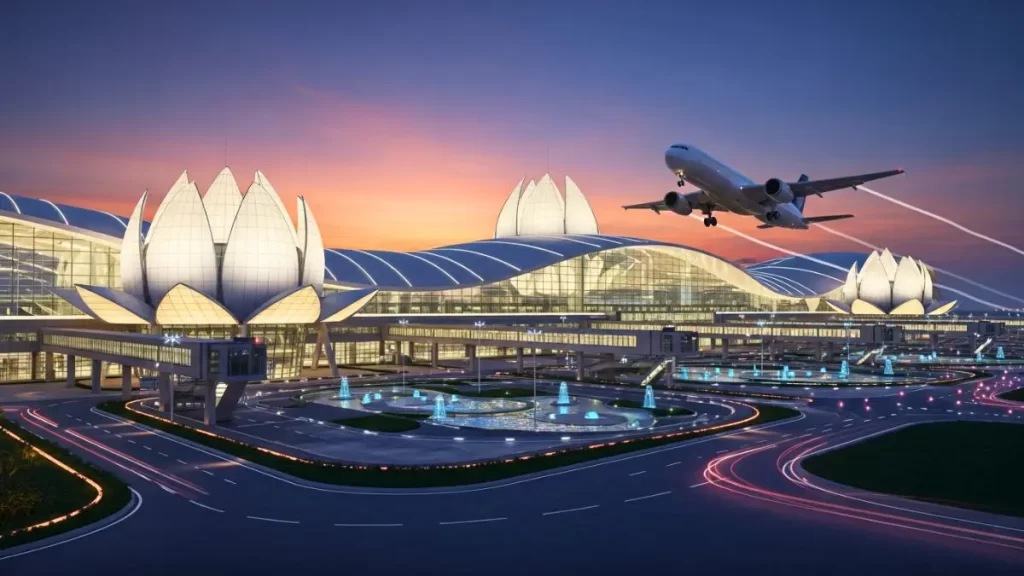
Commercial operations at the much-anticipated Navi Mumbai International Airport (NMIA) will officially commence on December 25, 2025, marking a historic milestone in India’s aviation infrastructure expansion. The confirmation was made by Jeet Adani, Director of Adani Airports, on December 19, 2025, providing clarity on the operational timeline of one of the country’s most strategic greenfield airport projects.
The announcement comes weeks after Prime Minister Narendra Modi formally inaugurated the airport on October 8, 2025, signaling the readiness of the facility to enter the final phase before full-scale commercial use. Once operational, NMIA is expected to significantly ease congestion at the existing Chhatrapati Shivaji Maharaj International Airport (CSMIA) in Mumbai and strengthen India’s position as a global aviation hub.
A Strategic Boost to India’s Aviation Ecosystem
Developed by Adani Airports Holdings Ltd, Navi Mumbai International Airport has been designed as a world-class aviation and logistics hub. Located in Raigad district, the airport is strategically positioned to serve the Mumbai Metropolitan Region (MMR), one of India’s largest economic and financial centers.
According to industry analysts, the launch of commercial flights from NMIA will transform regional connectivity, enhance passenger experience, and unlock new economic opportunities across Maharashtra. The airport is also expected to play a critical role in supporting India’s long-term civil aviation growth strategy.
Key Features of Navi Mumbai International Airport
The airport has been developed with a strong focus on capacity, sustainability, and future readiness. Key highlights include:
- Initial passenger handling capacity of millions annually, with phased expansion plans
- State-of-the-art terminal infrastructure designed for seamless passenger movement
- Dual runway system to support high aircraft movement
- Advanced cargo and logistics facilities to boost trade and exports
- Sustainable design elements, including energy-efficient systems and green spaces
These features position NMIA as one of the most modern airports in South Asia, aligning with global aviation standards.
Decongesting Mumbai and Driving Economic Growth
With air traffic in Mumbai consistently rising, the operationalization of Navi Mumbai International Airport is expected to significantly reduce pressure on CSMIA. Aviation experts note that the dual-airport model will improve flight punctuality, reduce delays, and offer airlines greater operational flexibility.
Beyond aviation, NMIA is projected to act as a powerful economic catalyst. Sectors such as real estate, hospitality, tourism, logistics, and employment are likely to see substantial growth in Navi Mumbai and surrounding regions following the airport’s launch.
Future Outlook
The commencement of commercial operations on December 25, 2025, represents more than just the opening of a new airport—it reflects India’s broader ambitions under its infrastructure-led development agenda. As passenger traffic, cargo movement, and international connectivity expand, Navi Mumbai International Airport is poised to become a cornerstone of India’s aviation future.
With strong government backing and private sector execution, NMIA is expected to redefine air travel in western India while reinforcing the country’s status as a fast-growing global aviation market.

