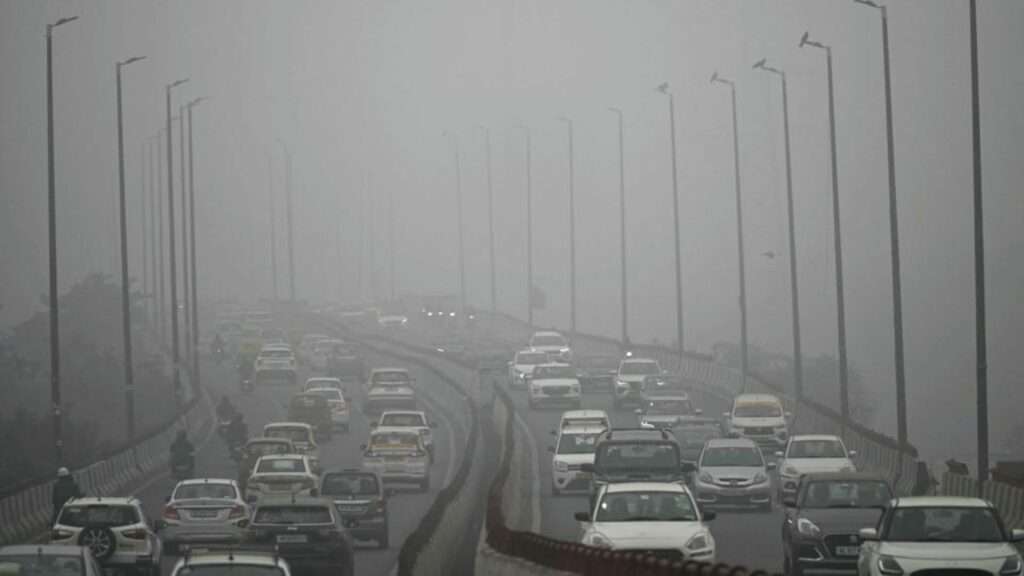
As the national capital grapples with one of the most hazardous pollution episodes this season, the Delhi government has issued an immediate suspension of all outdoor school activities and sports events. The decision comes amid alarming readings of the Air Quality Index (AQI) crossing the 400-mark, placing large parts of the city in the “severe” or even “hazardous” category. With children and vulnerable residents bearing the brunt of the smog, authorities and courts alike are sounding the alarm.
The AQI in many monitoring stations across Delhi has consistently surged above 400, a level classified as “severe”—indicating serious health risks even for healthy individuals. On Friday morning, the AQI at Anand Vihar was reported at 418, with other prominent locations such as Ashok Vihar and RK Puram registering 411 and 401 respectively.
In response, the government’s Directorate of Education and Directorate of Sports directed all recognised schools—government, aided, and private—to immediately suspend outdoor classes, sports meets, and other such activities until further notice. The move follows an advisory from the Commission for Air Quality Management (CAQM), which extended the suspension to universities, colleges, and entire sports associations in the National Capital Region (NCR) zone on health-risk grounds. The Supreme Court of India also urged the CAQM to instruct schools to postpone outdoor competitive events scheduled in November and December, pointing to the severe levels of pollution.
Major contributors to the deteriorating air quality include vehicular emissions, construction dust, industrial pollution, and cross-border crop-stubble burning in neighbouring states. A meteorological drop in wind speed and temperatures exacerbates the build-up of pollutants. Experts warn that exposure to persistent high levels of PM2.5 and PM10 affects children significantly—reducing lung capacity, triggering asthma attacks, and even affecting cognitive development.
| AQI Range | Category | Health Implications |
|---|---|---|
| 0–50 | Good | Normal, little to no health risk |
| 51–100 | Satisfactory | Minor concerns for very sensitive individuals |
| 101–200 | Moderate | General public may experience minor irritations |
| 201–300 | Poor | Increased risk of respiratory problems |
| 301–400 | Very Poor | Healthy individuals may experience breathing issues |
| 401–500 | Severe | Serious health risk even for healthy individuals |
- Suspension of all outdoor school activities, including sports meets.
- Imposition of CAQM advisory extending to colleges and sports organisations.
- Potential shift to hybrid/online learning mode being considered for younger students.
- Enforcement of stricter anti-pollution measures under the Graded Response Action Plan (GRAP).
Delhi’s air-quality emergency underscores the mounting challenges facing urban centres during winter smog seasons. With the AQI firmly in the “severe” zone and children’s health at risk, the suspension of outdoor activities marks a critical public-health intervention. Going forward, sustained relief hinges on coordinated actions: from enforcement of vehicle emission norms and controls on construction dust to cross-state collaboration on crop-burning and long-term urban-planning reforms. If such measures are delayed, the broader implications—ranging from increased healthcare burden to reduced child-development outcomes—could intensify. Stakeholders must now focus on both immediate relief and structural change to ensure the crisis does not recur.