
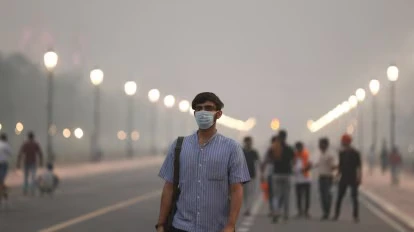
Delhi’s air quality crisis has intensified once again, with pollution levels remaining in the “severe” to “very poor” category even as winter temperatures hit their lowest point of the season. The capital continues to battle thick smog, prompting experts to call for urgent reforms to India’s air quality management framework to better address short-term health risks that recur each winter.
Toxic Air Persists Despite Curbs
Over the past week, several monitoring stations across Delhi recorded Air Quality Index (AQI) readings above 400 — a level classified as “severe,” where prolonged exposure can affect even healthy individuals. The city recorded morning temperatures near 10°C, setting up classic winter conditions including thermal inversion and still air, which trap pollutants close to the ground.
Authorities attribute the spike in pollution to multiple factors: vehicle emissions, ongoing construction activity, industrial output, and seasonal stubble burning in neighbouring states. These combined factors have overwhelmed the city’s anti-pollution measures, even as stricter curbs were activated under the Graded Response Action Plan (GRAP).
Public dissatisfaction is also rising. A recent survey of households in the National Capital Region (NCR) indicated that a significant majority of residents have low confidence in the consistent enforcement of emergency pollution restrictions.
Experts Criticise Reactive Approach
Environmental scientists and health specialists argue that Delhi’s recurring winter smog is the result of structural gaps rather than seasonal anomalies. While authorities have introduced short-term measures — including temporary traffic restrictions, bans on construction, and even cloud-seeding trials to induce rainfall — experts say these remain reactive steps with limited long-term impact.
Respiratory specialists point out that such interventions may briefly reduce pollution levels but do not address underlying issues such as outdated emission norms, insufficient industrial regulation, and inadequate regional coordination. Many experts have reiterated the need for India to overhaul its air quality framework to emphasise early-warning systems, year-round pollution control, and stronger health-based guidelines.
Health Concerns Escalate
The health implications of Delhi’s toxic air are becoming increasingly visible. Hospitals across the city have reported a rise in cases of respiratory distress, headaches, dizziness, stroke episodes, and general fatigue. Vulnerable populations — including children, the elderly, and those with chronic respiratory or cardiac conditions — are particularly at risk.
Doctors are urging residents to limit outdoor exposure during peak pollution hours, opt for masks in crowded areas, and use indoor air purification systems where possible. Medical professionals warn that extended exposure to high levels of particulate matter, especially PM2.5, can have long-term impacts on lung function, heart health, and even cognitive processes.
Calls for Overhauling Air Quality Governance
Policy experts assert that India’s existing air quality management system, including GRAP and the guidelines issued by the Commission for Air Quality Management (CAQM), must be updated to reflect current scientific insights and public health needs. While GRAP introduces stepwise restrictions based on pollution levels, enforcement inconsistencies and temporary bans often limit its effectiveness.
Activists argue that a more comprehensive, preventive strategy is necessary — one that strengthens regional collaboration, modernises emissions standards, expands public monitoring systems, and prioritises long-term mitigation over short-term emergency responses.
Delhi’s worsening winter smog crisis underscores a familiar pattern: despite periodic interventions, the city continues to confront hazardous air quality conditions each year. As experts intensify calls for systemic reforms, it is increasingly evident that India must adopt a more proactive, sustainable approach to air quality management. Without meaningful structural changes, Delhi’s residents may face the same health-threatening haze each winter, with consequences that extend far beyond the season.

