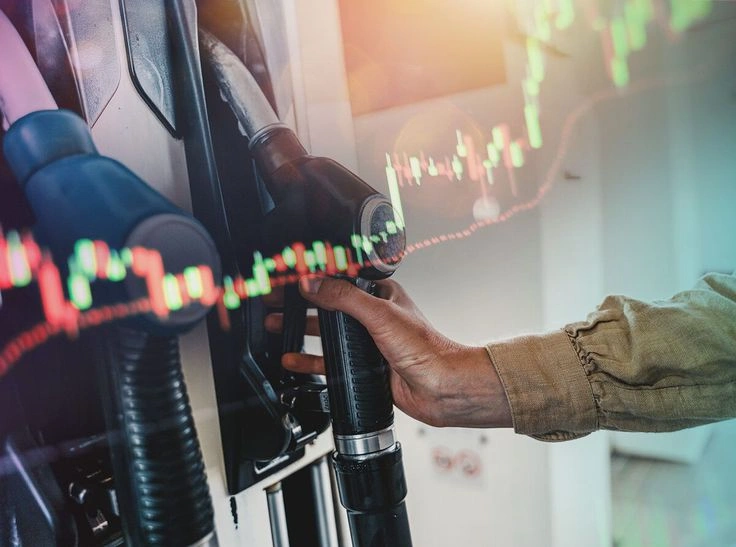
India uses the third most oil in the world, and escalating tensions in West Asia are making oil prices around the world unstable, which is making things even harder for India. Gas and diesel prices are going up all around the country as tensions escalate in crucial oil-producing areas. The crisis in West Asia has triggered these changes in fuel costs in India. This could affect people’s budgets, break supply chains, and raise prices for everyone. pricing for crude oil have risen by more than $85 a barrel in the last few weeks, and oil marketing companies (OMCs) are revising their pricing every day, so there is no end in sight. This site talks into detail about the reasons, short-term consequences, and long-term effects on Indian customers.
Oil prices are going up all around the world because of the growing unrest in West Asia.
The center of this problem is in West Asia, where geopolitical tensions have caused problems with oil supply lines. The Houthis are attacking trade lines in the Red Sea, and Iran and Israel are at war again. People are more worried about supply issues now. Iran is a significant OPEC member and makes roughly 3.2 million barrels of oil per day.Saudi Arabia and the UAE, India’s key crude oil suppliers, are trying to meet production restrictions during this time of trouble.
Prices of oil around the world have changed quickly. Brent crude, which is used as a global standard, went up 12% in just one month, reaching $86.50 a barrel on April 2, 2026. This is the biggest quarterly jump since the Russia-Ukraine war in 2022. The West Asia conflict has made things riskier: earlier this year, Houthi drone strikes on Saudi Aramco facilities cut production by 500,000 bpd for a short time. Iran’s threats to close the Strait of Hormuz, which is a key shipping route for 20% of the world’s oil, are also quite serious.
India is weak because it relies on imports. The country gets more than 85% of its crude oil from other countries, with 60% coming from the Middle East. When there are more problems in the world, the dynamic pricing mechanism used by Indian Oil Corporation (IOC), Bharat Petroleum (BPCL), and Hindustan Petroleum (HPCL) makes fuel prices in India fluctuate practically right away.
How India’s Fuel Pricing System Makes Gas and Diesel Prices Go Up
Since 2014, India’s gasoline prices have been tied to the market. This means that the prices of petrol and diesel change every two weeks or every day dependent on the prices of crude oil, exchange rates, and refining expenses. OMCs buy crude oil in dollars, and the falling value of the rupee—now at ₹84.20 per dollar—makes things worse.
The recent rises in the price of gasoline and diesel are a perfect example of this:
In major cities on March 28, 2026, the price of petrol went up by ₹2.50 per liter. In Delhi, it reached ₹105.80, and in Mumbai, it reached ₹112.45.
Diesel prices also went up by ₹2.20, bringing the price in Delhi to ₹95.60 because of greater shipping expenses due to routes being blocked.
These aren’t one-time events; since January, gas prices have gone up by ₹8.40 and diesel prices have gone up by ₹7.90. Experts say that 50% of the rise is due to rising global crude prices, which add ₹4.20 per liter, 20% is due to the rupee losing value (₹1.70), and another 20% is due to higher refining and freight costs (₹1.60). Taxes stay the same at about 50% of the retail price. The restrictions oil output by OPEC+ that limit supply to 41 million bpd make things even more unstable.
Immediate Effects: Rising Costs for Daily Needs and Commutes
For most Indians, these changes in fuel prices imply that their commutes and grocery expenses would cost more. Transportation, mostly by trucks and buses, uses 40% of all diesel, which raises freight prices by 15% across the country. The cost of diesel for a 1,000-kilometer truck trip has gone up from ₹1.05 lakh to ₹1.2 lakh.
People who live in cities feel the most pain:
For people who own two-wheelers, a ₹2.50 rise in the price of petrol means an extra ₹150 a month for a 500-km trip.
Cab drivers: Ola and Uber fleets are losing 10–12% of their profits, which is why prices are going up in big cities.
According to the Federation of Indian Chambers of Commerce and Industry (FICCI), 70% of irrigation pumps run on diesel. If food prices climb, farmers could see their costs rise by 8%.
The Reserve Bank of India (RBI) forecasts that inflation, as felt by Indian consumers, will reach 6.2% during the second quarter of 2026. Fuel prices are expected to add another 1.5 percentage points to this number.
The effects are already visible in inflation-sensitive areas. Consider vegetables, for example, where transportation costs have surged by 12%. Milk prices have also climbed, up by 5%.
Wider Economic Effects: From Business to Government Money
The impact isn’t limited to individuals; whole sectors are now feeling the strain. The aviation sector felt the sting when the cost of aviation turbine fuel (ATF) surged by 9%. This sudden increase dealt a serious blow to the expansion plans of low-cost carriers.
MSMEs reliant on diesel generators during power shortages are watching their profits dwindle.
For example, textiles in Tamil Nadu report a 7% rise in costs.
It’s hard because the government has two jobs. Excise taxes on diesel (₹15.33/liter) and petrol (₹19.98/liter) bring in ₹2.2 lakh crore every year, which helps cover budget shortfalls. But in politics, price increases lead to backlash. To calm consumers down, governments like Maharashtra and Karnataka have cut VAT by 2–4%.
Crisil analysts say that if oil prices stay at $90 a barrel through 2026, the economy could lose 0.4% of its GDP. Exports are hurt too: Higher diesel prices make shipping costs go up, which hurts industries like gems and jewelry from Surat, where content creators keep a close eye on logistics.
Expert Voices: Navigating the Storm
Hardeep Singh Puri, the Minister of Petroleum, said recently, “India’s strategic reserves cover 10 days of imports, which protects us against problems caused by conflicts in West Asia.” But Subir Raha, a former head of ONGC, warns that “long-term conflicts could push prices over $100/barrel, which would require diversification.”
“measures in fuel prices in India aren’t only caused by the market; policy measures like ethanol blending (currently at 20%) help a little by lowering import bills by ₹45,000 crore last year,” says economist Arvind Subramanian. It’s true that blending has helped keep prices steady, but it’s not a cure-all for the ups and downs of global oil prices.
Environmental experts point out a silver lining: higher prices could speed up the use of electric vehicles (EVs). FAME-III subsidies are meant to quadruple the number of electric vehicles sold by 2027, while 1.5 million were sold in 2025. This would help the country become less reliant on oil in the long term.
How the government and businesses reacted to rising petrol and diesel prices
The Union Cabinet then agreed to release 2 million tonnes from strategic reserves in March. States like Gujarat and Uttar Pradesh gave farmers diesel subsidies and kept prices at the same level as before the spike. OMCs are looking into doing deals with Russia in rupees, which sells 1.8 million barrels per day at a discount.
The industry wants changes:
Cutting excise taxes back to 2014 levels.
By 2027, 30% of the fuel must be ethanol.
In Maharashtra, biofuels are growing from extra sugarcane.
How to Deal with Changes in Fuel Prices in India
Families aren’t helpless. Some useful steps are:
Carpooling and public transportation: After the price hikes, more people rode the metro in Delhi-NCR.
Cars that use less gas: Hybrids save 30% on gas.
Budgeting apps: Keep track of your spending to make up for monthly increases of ₹500–800.
Advocacy: Change.org and other sites have petitions asking for stable prices.
Investing in EVs or CNG conversions, which are popular in Pune, can save you money in the long run. For example, a CNG kit costs ₹60,000 and pays for itself in 18 months at the present rates.
Fuel costs in India are going up because of tensions throughout the world: Consumers don’t like it when the price of gas and diesel goes up because of the war in West Asia.