
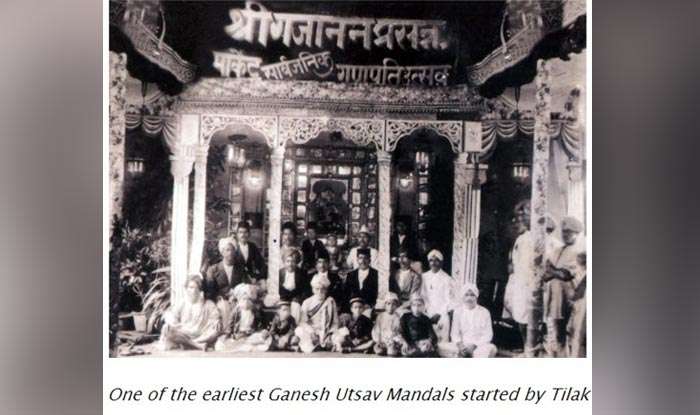
In the late 19th century, India was under British colonial rule, and public gatherings for political purposes were heavily restricted. During this period, Lokmanya Bal Gangadhar Tilak, a prominent freedom fighter and social reformer, ingeniously transformed the traditional Ganesh Chaturthi festival into a public event that united Indians across social and regional divides. Tilak’s efforts not only revitalized cultural practices but also subtly laid the foundation for a mass movement against colonial rule.
Ganesh Chaturthi, originally a private domestic festival celebrating the birth of Lord Ganesha, was largely confined to homes and small community gatherings. Recognizing the potential of cultural festivals as instruments for social mobilization, Tilak in the 1890s reimagined the festival as a public celebration that encouraged collective participation. By organizing large, community-centered events, he provided a platform where people from different castes, classes, and regions could come together under the banner of shared cultural pride.
Tilak’s strategy was both cultural and political. Public celebrations of Ganesh Chaturthi included processions, speeches, plays, and patriotic songs that subtly encouraged nationalist sentiment. These gatherings created a sense of collective identity, strengthening social cohesion while also challenging British restrictions on public assembly. The festival, therefore, became a tool for political education, enabling ordinary citizens to engage in the independence movement without overtly confronting colonial authorities.
Another significant aspect of Tilak’s initiative was its focus on inclusivity. By promoting participation from all sections of society, the festival broke traditional barriers of caste and class, fostering a sense of unity essential for a national movement. It allowed ordinary people, including women and marginalized communities, to participate in public life and the burgeoning freedom struggle, giving them a voice in shaping India’s political destiny.
Tilak’s efforts were not limited to Maharashtra; his model inspired similar strategies in other parts of India, where cultural and religious festivals became vehicles for social mobilization and political awakening. The transformation of Ganesh Chaturthi demonstrated how cultural heritage could be harnessed for broader socio-political objectives, blending devotion with patriotism.
Through his visionary approach, Lokmanya Tilak successfully transformed Ganesh Chaturthi from a private religious observance into a public celebration that united people across social and regional divides. His initiative not only strengthened the nationalist movement but also reinforced the idea that cultural festivals could serve as instruments of collective identity and political consciousness. Tilak’s legacy endures, highlighting the profound impact of combining culture, community, and patriotism in the pursuit of India’s independence.

