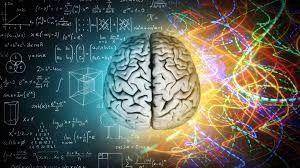
In the past, people thought that the brain didn’t change after childhood. But new research reveals that this isn’t true; your brain can alter at any age. This is called neuroplasticity. It shows that people may learn new things, recover better from catastrophic illnesses like strokes, and even modify habits that have been established for a long time. The brain is not a fixed organ; it is very adaptable, giving people hope for growth, recovery, and improved cognitive function as they get older. Neuroplasticity is becoming a major feature of neuroscience as research moves faster. A lot of people might have different ideas about getting older, learning, and mental health.
This article talks a lot about neuroplasticity, such as what it is, how it works, and how it might be useful in real life. We discuss about how people of all ages, from young professionals to older people, can leverage the brain’s innate ability to rewire itself to make things better, like their work or their emotional strength. We do this by using strong facts and ideas that well-known experts have shown work.
Neuroplasticity: How to Change an Adult’s Brain
Neuroplasticity is the brain’s extraordinary ability to modify how synapses connect when you learn something new, have an experience, or get hurt. People in the early 1900s felt that the connections in the brain were established in stone by the time a person turned 13. But a new study reveals that neuroplasticity doesn’t stop when you’re an adult. In the 1980s, neuroscientists like Michael Merzenich produced critical research that showed how sensory inputs could modify the way the brains of adult monkeys are mapped. Functional MRI (fMRI) and other advanced imaging methods show these changes as they happen.
There are two main ways that neuroplasticity works: synaptic plasticity and structural plasticity. Synaptic plasticity affects how strong the connections between neurons are based on how often they function together. People say, “Neurons that fire together wire together.” Neurogenesis is the process by which dendrites, axons, and even new neurons grow physically. This is called structural plasticity. This is extremely important for the hippocampus’s ability to learn and remember things.
Statistics illustrate how probable this is to happen. In 2023, Nature Reviews Neuroscience published a meta-analysis that looked at more than 50 studies. It found that 85% of adults who took part in the study had their brains transformed by systematic training, regardless of their age. People over 60 saw cognitive scores go up by as much as 20%, which is roughly the same as what younger groups witnessed. This study disproves the simple concept that “use it or lose it” by proving that the brain may change shape at any age if it gets the correct kind of stimulation.
Neuroplasticity in Adulthood: Debunking Childhood Myths
William James and others have argued in the past that the brain’s potential to alter a lot less after childhood. For a long time, this affected therapy and school. But big discoveries have changed this story in a big way. Hubel and Wiesel’s Nobel Prize-winning research on modifying the visual cortex in kittens in the 1960s hinted at broader difficulties, but studies on adults confirmed them.
Neuroplasticity works best when it comes to helping people get better after a stroke. Some regions of the brain that weren’t hurt in a stroke can take up jobs that were lost. A study of 200 patients led by neurologist Edward Chang at the University of California indicated that strong therapy produced neuroplastic rewiring. This helped 70% of them regain some motor control within six months. Constraint-induced movement therapy and other comparable approaches help the brain adapt by limiting the use of unaffected limbs and forming new connections.
Neuroplasticity indicates that you can change your habits even if you damage yourself. Judson Brewer, a behavioral neuroscientist at Brown University, has used fMRI scans to show how mindfulness training affects the brain’s reward pathways. After just eight weeks of using his apps, smokers who stopped had reduced activity in the anterior cingulate cortex, which is the area of the brain that governs cravings. This suggests that practicing can help people avoid addiction by making their brain networks stronger.
Neuroplasticity could be helpful in a few main ways:
– People who learn languages or play musical instruments have a bigger hippocampus, according to research from the Max Planck Institute.
– People over 50 think that brain-training apps like Lumosity can improve their memory by 15% to 25%.
– Mental Health: Therapy for anxiety modifies how the amygdala works, which makes fear conditioning 40% less likely in clinical trials.
– These results show how important neuroplasticity is for both improving oneself and getting better.
Success Stories of Neuroplasticity in Real Life
The stories of each person show how strong neuroplasticity is. Barbara Arrowsmith-Young is an excellent example of someone who learns better by completing particular mental exercises. Doctors identified neurological issues in her when she was a child. Then she started the Arrowsmith Program, which uses neuroplasticity to improve weak brain functioning. Her schools now teach hundreds of kids, and former students say that their brains were rewired, which helped them do better in school and at employment.
Neuroplasticity helps players do their best in their sport. After getting hurt, Tiger Woods had to learn how to swing again. This means that he was able to achieve so with the use of mental visualization techniques that modified the way the motor cortex mapped things out. In 2024, the Journal of Neurophysiology published a study that was also on senior musicians. Violinists over 70 who practiced every day had nearly the same amount of cortical thickness as musicians in their 30s. This helped them stay flexible because their brains were still maturing.
The ACTIVE research, which lasted 20 years and had 2,800 participants, showed that older people who were experiencing trouble with their memory might put off getting dementia by 30% by boosting how quickly they process information. The brains of the people who took part changed how they processed visual information so they could do it faster. This suggests that neuroplasticity might help stop amyloid plaques and other Alzheimer’s symptoms from getting worse.
There is hope even in the worst things. Surgeons ripped out synapses in patient H.M.’s hippocampus in the 1950s. This made it look like he will develop anterograde amnesia. But other research showed that nearby areas were able to adapt partially by rewiring themselves. There are modern parallels in veterans with traumatic brain injuries (TBIs); virtual reality therapies remodel the brain’s structure, and according to VA hospital data, they restore executive function in 60% of cases.
These anecdotes prove that neuroplasticity isn’t just a theory; it’s something that really helps people attain their full potential.
Neuroplasticity: How to Change Your Brain Every Day
Anyone can use the brain’s ability to change itself if they use methods that have been proved to work. Start with aerobic exercise, which elevates levels of brain-derived neurotrophic factor (BDNF), a protein that helps the brain change. A study at Harvard with 1,200 adults found that walking quickly for 30 minutes every day made the hippocampus 2% bigger, which helped them recall things.
Now it’s time for the scheduled practice. Anders Ericsson’s “10,000-hour rule” accords with neuroplasticity since repeating something over and over again generates myelin sheaths that speed up signals. In just a few months, anyone who use language-learning apps like Duolingo may see Broca’s area get bigger.
Getting enough sleep and eating well makes your effects stronger. Your brain strengthens new connections as you sleep. If you don’t get enough sleep for a long time, your neuroplastic benefits will be slashed in half. A 2025 article in The Lancet said that diets high in omega-3s enhance BDNF levels by 25%. Autophagy is turned on by intermittent fasting, on the other hand. This clears out junk in the brain so that new connections can be made.
With new technology, this happens more quickly:
– Transcranial Magnetic Stimulation (TMS) sends non-invasive pulses to the brain that change its structure. It works for 50% of patients who haven’t responded to conventional treatments.
– Neurofeedback is a great way for people with ADHD to train their brains in real time by utilizing an EEG to help them focus better.
– Researchers at Johns Hopkins have found that psilocybin speeds up the growth of dendritic spines, which helps the brain restructure itself after PTSD.
Use more than one strategy to get the most out of neuroplasticity:
– To keep your mind sharp, do something new every day, like solving puzzles or discovering new ways to get home.
– For the finest results, work out both your mind and body at the same time.
– Mindfulness can help the prefrontal brain control its impulses better.
– Keep a journal to keep track of your progress and stay inspired.
– are professional help to make sure the rewiring is safe if you are wounded.
– It’s better to be steady than to be intense. Even 15 minutes a day could mount up over time.
Challenges and the Future of Neuroplasticity Research
Even while some things have gone smoothly, there are still issues to deal with. As you get older, your BDNF and inflammatory levels go down. This can make the rewiring process take longer. But you can help with this by changing how you live. Genetic factors, such as APOE4 polymorphisms, can influence the rate of plasticity. But epigenetics shows that environmental factors often have a bigger effect than genetic ones.
Tools that make things better make us reconsider our morals. Brain-training companies have made too many promises, which has made many furious and led to calls for standardized exams. Not everyone can get the same medications, which makes the differences even worse.
In the future, CRISPR gene editing will focus on genes that make things flexible, and AI will adjust how it works for each person. A group at Stanford believes that treatments based on neuroplasticity could add five healthy years to the average lifespan by 2040. As quantum computers get better at mimicking brain networks, there will constantly be new things happening, and rewiring will become commonplace.
Final Thoughts
Neuroplasticity shows that the brain can change at any age. This lets stroke victims walk again, professionals change occupations, and older people get smarter.It includes a lot of ways to help you grow and get stronger, such as changing how you act and making your synapses work better. You can do this by working out, practicing, and using technology to learn. There are potentially bigger advancements to come from research that is still going on.
Neuroplasticity affects what people think they can and can’t do. Because of this, civilizations aim to make sure that people can keep learning all their lives.The question isn’t whether we can change, but how much we’ll change when we do. What will you learn that is new today?
How neuroplasticity may change your brain at any age to give you the mental strength to live