
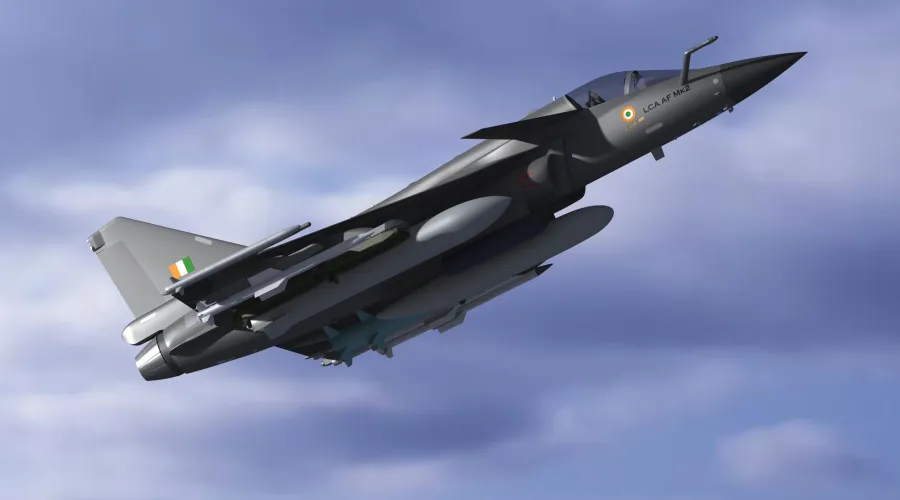
July 26,2025 — In a significant development for India’s defense capabilities, Dr. Kota Harinarayan, the chief designer of the indigenous Tejas fighter jet, has revealed that the country is technically prepared to develop a sixth-generation unmanned fighter aircraft. The future jet, he stated, could operate autonomously or be piloted, offering flexibility in combat roles.
According to Dr. Harinarayan, the aircraft would feature a flying wing design, a configuration that enhances stealth and aerodynamic efficiency by eliminating the traditional fuselage and tail structure. This design is currently being pursued by leading global military powers, including the United States and China.
“We have achieved substantial progress in avionics, stealth technologies, and autonomous systems. Based on this foundation, we are in a position to take on the challenge of developing a sixth-generation unmanned fighter,” Dr. Harinarayan said.
The announcement comes as India continues to strengthen its defense manufacturing under the ‘Aatmanirbhar Bharat’ (self-reliant India) initiative. It also aligns with ongoing indigenous projects such as the Advanced Medium Combat Aircraft (AMCA) and the Ghatak Unmanned Combat Aerial Vehicle (UCAV), both of which focus on stealth and next-generation warfare technologies.
A key feature of the envisioned fighter jet would be its autonomous combat capability, powered by artificial intelligence (AI) and machine learning. These systems would enable the aircraft to process battlefield data in real-time, make tactical decisions, and engage targets independently, reducing the risk to human pilots.
Defense analysts believe that the incorporation of such technologies would not only enhance the Indian Air Force’s (IAF) operational capabilities but also open new avenues for defense exports and strategic partnerships. The aircraft’s dual-mode functionality—allowing both manned and unmanned operations—would provide India with tactical superiority in future warfare scenarios.
The Defense Research and Development Organisation (DRDO) is expected to play a central role in this project, with potential support from private aerospace firms and academic institutions. Collaborations are likely to focus on stealth materials, AI integration, and long-range communication systems.
Strategic experts view this development as a clear signal of India’s ambition to join the elite club of nations pursuing sixth-generation fighter technologies. If realized, the project could redefine India’s air combat doctrine and bolster its position as a regional power.
This announcement follows recent milestones in indigenous defense technology, including upgrades to the Tejas platform and advancements in unmanned aerial systems. With geopolitical tensions in the Indo-Pacific region and increasing emphasis on high-tech warfare, India’s readiness to enter the sixth-generation fighter domain marks a critical step in future-proofing its military capabilities.

