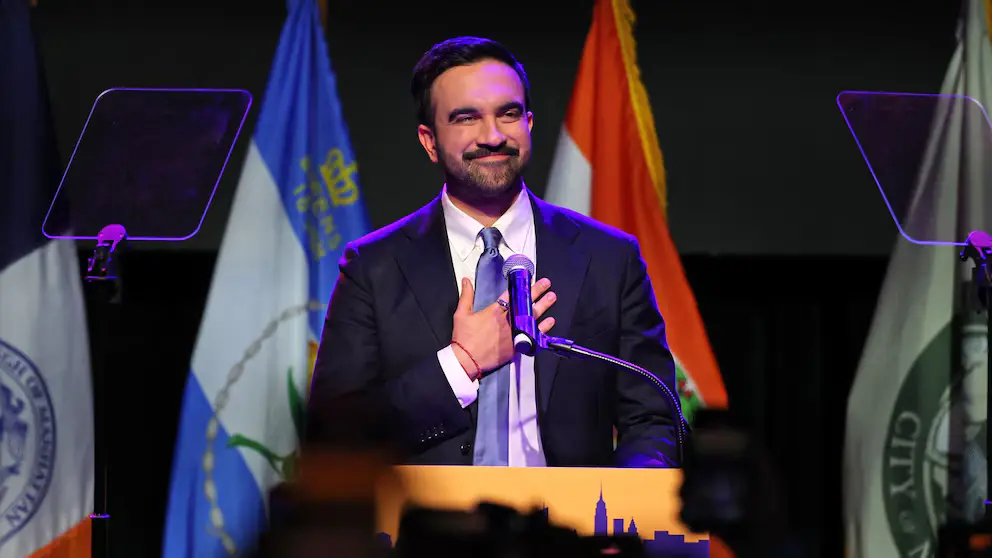
In a watershed moment for urban politics and identity representation, 34-year-old Democrat Zohran Mamdani has been elected the 111th mayor of New York City, becoming the city’s first Muslim, first South Asian, and one of its youngest mayors in more than a century. His victory marks a dramatic shift in local politics and sends ripples far beyond the five boroughs.
Mamdani’s win is historic on multiple fronts. Not only is he the city’s first Muslim mayor, but he also becomes the first South Asian-American and one of the youngest individuals to hold the office in over a hundred years. Born to Indian-origin parents, his ascent signals a broader diversification of political leadership in one of America’s largest and most influential cities.
Running as a self-described democratic socialist, Mamdani campaigned on a bold affordability agenda centered on rent freezes, expanded universal childcare, fare-free public transit, and higher taxes on corporations and high earners. He sought to portray himself as the voice of the working class and immigrant communities, repeatedly emphasizing New York’s diversity and resilience during his campaign and victory speech.
The mayoral race saw unprecedented engagement, with more than two million New Yorkers casting ballots — the highest turnout since 1969. Mamdani secured just over 50 percent of the vote in the general election. His chief opponent, former governor Andrew Cuomo, ran as an independent after losing the Democratic primary but was unable to overcome Mamdani’s grassroots momentum and youth-driven appeal.
Mamdani’s victory speech captured global attention as he referenced India’s independence movement, echoing Jawaharlal Nehru’s historic words from the “Tryst with Destiny” address. The event’s highlight came when supporters chanted “Dhoom Machale” — a Bollywood phrase meaning “let the storm move” — symbolizing celebration, energy, and cultural pride. The moment went viral across social media, resonating deeply with the Indian diaspora and underlining the multicultural spirit that defines both New York City and Mamdani’s campaign.
Despite the celebratory tone, Mamdani faces significant governance challenges as he prepares to take office on January 1, 2026. Business leaders, conservative commentators, and policy critics have expressed skepticism about his progressive agenda and lack of executive experience. To counter these concerns, Mamdani has assembled a diverse transition team, including prominent figures from law, housing, and economic reform sectors, reflecting his intent to bring both idealism and pragmatism into his administration.
Zohran Mamdani’s election as mayor of New York City is more than a personal triumph — it is a landmark in American political history. His win highlights the growing influence of progressive politics, the empowerment of younger and diverse voters, and the expanding role of immigrants and minorities in shaping urban governance. As the world watches his next steps, Mamdani’s leadership will serve as a litmus test for the evolving identity of one of the world’s most dynamic cities and its pursuit of inclusive progress.