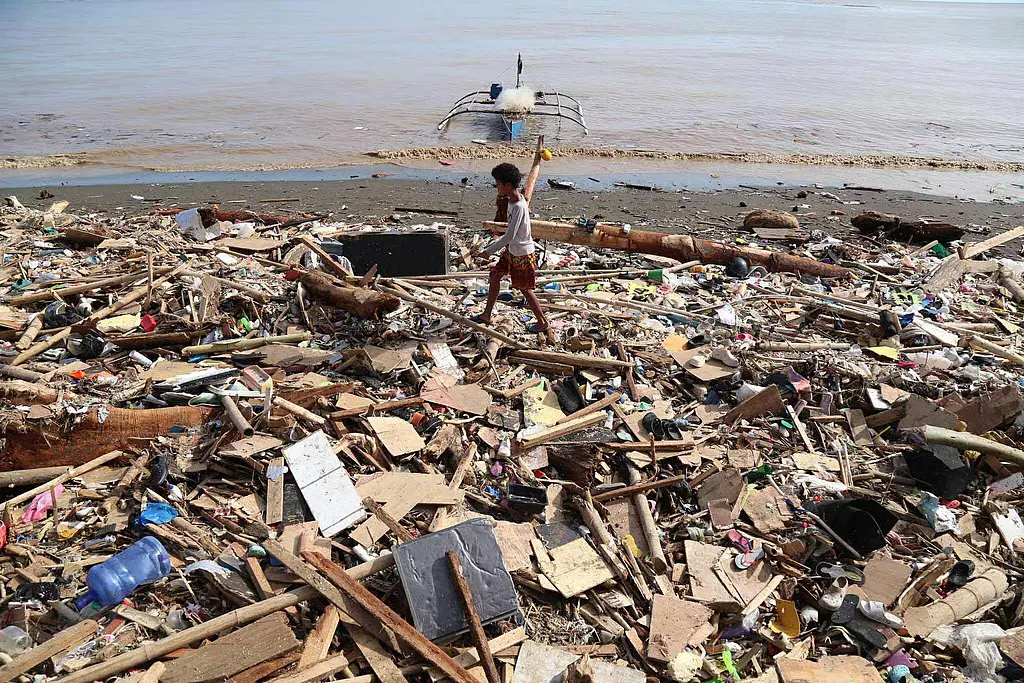
In a dramatic escalation of the weather crisis in Southeast Asia, Typhoon Kalmaegi — locally named “Tino” — has carved a deadly path through central Philippines, prompting President Ferdinand Marcos Jr. to declare a state of national emergency. The storm has already claimed at least 114 lives and left 127 people missing as of November 6, 2025, while over 560,000 residents have been displaced by destructive flooding, particularly across the province of Cebu. With its trajectory now directed toward Vietnam, the typhoon’s impact is far from over, raising serious concerns about humanitarian, infrastructural, and climate-resilience challenges across the region.
The typhoon made landfall on November 4 and dumped massive rainfall amounts — in some areas equivalent to one and a half months’ worth of rain in a single day — triggering flash floods and widespread overflow of rivers and waterways. The hardest-hit region is Cebu and the surrounding Visayas, where at least 71 people died in Cebu alone and dozens remain unaccounted for. Displacement is staggering: nearly 2 million people have been affected and more than 560,000 villagers evacuated to emergency shelters.
President Marcos’s declaration of a “state of national calamity” allows for a faster release of disaster funds, curbs on food hoarding, and emergency price controls amid mounting logistical and relief-effort challenges. Moreover, the disaster has exposed long-standing infrastructure issues. Officials in Cebu blamed years of quarrying, inadequate flood-control projects, and river-clogging debris for the scale of the disaster — calling into question investment and accountability in resilient infrastructure. The crisis was compounded when a military helicopter crashed in Agusan del Sur during a relief mission, killing six personnel and further illustrating the operational risks of disaster response.
Having exited the Philippine archipelago and entered the South China Sea, Typhoon Kalmaegi is now bearing down on Vietnam’s central region. Vietnamese authorities warn of heavy rainfall — up to 100 mm in some low-lying districts — and high tides on the Saigon River that could exacerbate flooding in Ho Chi Minh City. The storm’s re-intensification and potential landfall make it one of the most serious threats this season for Southeast Asia’s coastal zones, where preparedness and climate adaptation remain uneven.
Beyond immediate loss of life and property, the region faces economic disruption, agricultural losses, and stress on both local and international relief systems. The fact that this is coming on the heels of a recent 6.9-magnitude earthquake in northern Cebu illustrates the compound nature of disaster risks in the Philippines.
Typhoon Kalmaegi has struck as the deadliest natural disaster for the Philippines this year, compelling swift government action even as the full scale of destruction continues to emerge. The declaration of a national emergency by President Marcos is a critical first step in mobilizing funds, managing logistics, and launching relief efforts. Yet the storm also lays bare deeper vulnerabilities — weak infrastructure, environmental mismanagement, and rising climate hazards. With Vietnam now bracing for impact, the region must prepare for not only the immediate response but also the long-term task of building resilience to recurring tropical cyclones. As clean-up begins and missing persons are searched for, the real challenge lies ahead: transforming the crisis into a catalyst for improved disaster preparedness and climate adaptation across the region.