
New Delhi — India is changing the way it does business with other countries in a way that is worth paying attention to. India has been careful—some might even say skeptical—about getting into free trade deals for years. Now, though, the country is actively looking for partnerships that could change how it does business with the rest of the world.
It’s extremely interesting how things have changed. Not that long ago, Indian politicians would raise their eyebrows and have protracted discussions about how to defend home businesses if free trade deals came up. Today? India’s trade talks are moving forward with a strong feeling of confidence and ambition.
Why the Change of Heart?
To be honest, India has good reasons for not wanting open trade. The country had seen its trade imbalances with some partners expand, and there were real worries that small firms would be hurt by cheap imports. Owners of factories were apprehensive. Farmers were worried. These worries were heard by politicians.
But the world went on. India might have been left out since other countries were making deals and building economic blocs. The COVID-19 epidemic sped up everything and showed how vulnerable global supply chains can be. All of a sudden, countries craved fresh relationships, options, and diversity. India saw a chance.
India’s choice to leave the Regional Comprehensive Economic Partnership in 2019, a huge trade treaty between 15 countries, may have seemed like it was closing doors. In truth, the country chose to be more picky about which doors to open and on what circumstances.
The Deals That Are Actually Working
This is when things start to get interesting. India hasn’t just been talking about trade deals; some are actually in place, and the outcomes are good.
For example, look at the contract with the UAE. Trade between the two countries has really picked up since it started in the middle of 2022. It’s easier for Indian jewelers to sell in Dubai now. More goods are being moved by agricultural exporters. At the same time, Emirati money is going into Indian tech and infrastructure businesses. Trade agreements promise this kind of win-win situation, but they don’t always deliver.
Next up is Australia. The deal that was signed in 2022 has been very excellent for Indian IT workers and pharmaceutical businesses. India gets into a sophisticated market that values excellent services, while Australia receives reliable access to India’s huge skill pool and cheap medications. Australian mining companies are also finding it easier to send important minerals to India, which needs them badly for its burgeoning electronics and battery industries.
India is currently having serious negotiations with certain major economies. The talks with the UK have been going on for a while, probably longer than either side would have liked, but both parties really want to get it done. We’re talking about maybe increasing trade between two countries that now conduct almost $40 billion worth of business with each other each year.
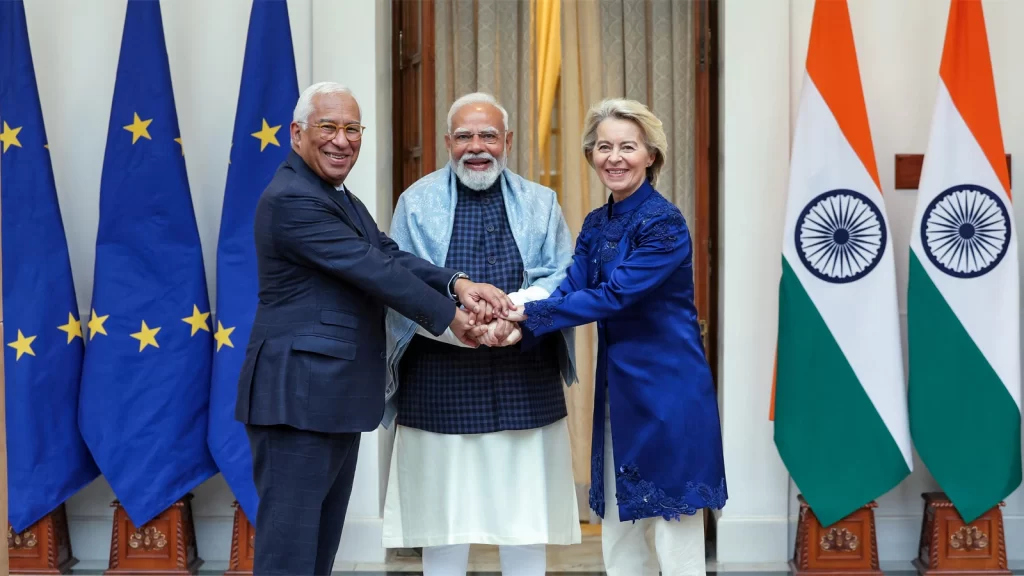
The talks between the EU and the US are considerably more important. India’s third biggest economic partner is Europe, and a big agreement might change everything. But let’s not sugarcoat it: these talks are hard. People don’t agree on a lot of things, like regulations for protecting cheese and wine, standards for protecting data, and carbon border taxes.
The benefits for customers are clear: more options and lower prices. Trade obstacles make it easier and cheaper to buy things like Australian wine, European cheese, Japanese technology, and American almonds. Competition also makes domestic producers work harder, which is good for everyone in the end.
The worries that no one is ignoring
Not everyone is happy, of course. And we should take their worries very seriously.
Manufacturing groups, especially in industries like steel, electronics, and chemicals, are worried that cheaper imports would hurt their business. They’ve seen it happen previously with the ASEAN trade deal, which made India’s trade deficit with Southeast Asian countries much bigger. Those recollections are still fresh.
Farmers and groups who work with agriculture may be the most strident doubters.Policymakers are quite worried that agricultural imports could hurt domestic producers. That’s why you would note that India is quite careful when it comes to negotiating about agricultural products. They often keep them in the “sensitive” category and don’t make many compromises.
Another question is whether India can really carry out these agreements well. It’s one thing to have a signed treaty.
India is increasing its economic relations with Japan, South Korea, and ASEAN countries. This is in addition to its security cooperation in the region. Economics and geopolitics are becoming more and more linked, and India is playing both sides at the same time.
What Happens Next?
India’s FTA strategy isn’t just about negotiating deals; it’s about making them function. That involves putting money into ports, roads, and logistics so that exporters can deliver their goods to foreign markets quickly and easily. It includes teaching customs personnel how to do their jobs better and making the paperwork easier. It involves helping small firms comprehend and take advantage of the benefits these deals offer.
Small and medium-sized businesses are very important here. Big companies have lawyers and others who know a lot about business. A tiny factory in Coimbatore or a handicraft exporter in Jaipur might not even realize what benefits they can get from different FTAs. Government outreach and assistance programs could make a big difference in making commerce more open to everyone.
India wants to become a $5 trillion economy, and good trade policy is a big part of it. The government seems to have discovered a medium ground: it interacts with the rest of the world without putting its own industries at risk, opening markets where India is strong while preserving sectors that need more time to catch up.
In the following few years, it will be easier to tell if this method works. But one thing is for sure: India is no longer only watching global commerce. It’s actively changing the norms of engagement, and that change alone shows how much the country has changed in how it perceives itself and its role in the world economy.

