
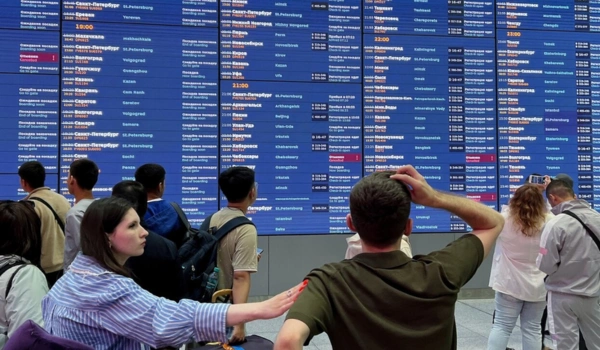
Russia temporarily halted operations at four airports early Tuesday after authorities issued urgent warnings of potential drone attacks across several southern and western regions. The heightened alert, accompanied by instructions for residents to take shelter, reflects the growing frequency of unmanned aerial vehicle (UAV) threats deep inside Russian territory and the increasing strain placed on the country’s civil-aviation network.
Airports Closed Amid Escalating Security Concerns
Airports in Vladikavkaz, Grozny, Magas, and the military-linked Mozdok region suspended all incoming and outgoing flights as aviation regulators activated emergency protocols. Regional administrations simultaneously warned civilians to remain indoors, avoid windows, and prepare for possible communication disruptions — a common precaution during counter-drone operations.
Officials noted that while no confirmed drone strikes occurred during the alert window, the closures were enacted as a preventive measure following intelligence assessments suggesting the possibility of incoming UAV activity. The swift shutdown of airspace underscores a pattern that has intensified throughout the year, with airports frequently pausing operations due to drone-related threats.
Civilian Travel Disrupted as UAV Threats Intensify
The abrupt suspension of travel left hundreds of passengers grounded and caused ripple effects across national flight schedules. Aviation authorities stated that operations would resume only once the airspace was deemed secure. The repeated closures reflect a growing challenge for both airlines and passengers, with UAV alerts increasingly forcing temporary suspensions in multiple regions.
Travel analysts warn that continuous drone-related disruptions may deter airlines from maintaining regular services to vulnerable zones. Additionally, logistical delays for cargo carriers could impact supply chains, particularly in regions heavily dependent on air transport.
Regional Warnings and Public Safety Measures
Authorities in several affected areas issued synchronized advisories urging residents to follow safety protocols. These included staying indoors, limiting road travel, and preparing for temporary reduction in internet or mobile connectivity — precautionary measures often used when electronic warfare or tracking equipment is activated to identify incoming drones.
The coordinated regional response highlights growing concern over the expanding reach of UAVs, which have increasingly targeted military infrastructure and strategically important facilities. The alerts also come amid broader tensions along Russia’s western and southern borders, where drone sightings have become more frequent.
Recent UAV-Related Flight Disruptions in Russia
| Date | Regions Affected | Impact |
|---|---|---|
| December 2025 | Vladikavkaz, Grozny, Magas, Mozdok | Full suspension of airport operations due to drone alerts |
| November 2025 | Major Moscow airports | Temporary shutdown after drones detected near flight paths |
| Multiple Dates in 2025 | Southern, Central regions | Recurring airspace closures linked to UAV threats |
Analysis: A Growing Strategic and Civilian Challenge
The widespread use of drones in modern conflict has reshaped Russia’s internal security landscape, creating new vulnerabilities for air traffic and civilian life. Authorities now frequently resort to swift airport closures as a defensive measure, signaling both the seriousness of the threat and the limitations of current counter-UAV capabilities.
Experts note that unless new technological frameworks are deployed to detect and neutralize drones earlier, disruptions are likely to persist. The challenge extends beyond military strategy and increasingly affects economic stability, transportation safety, and public confidence.

