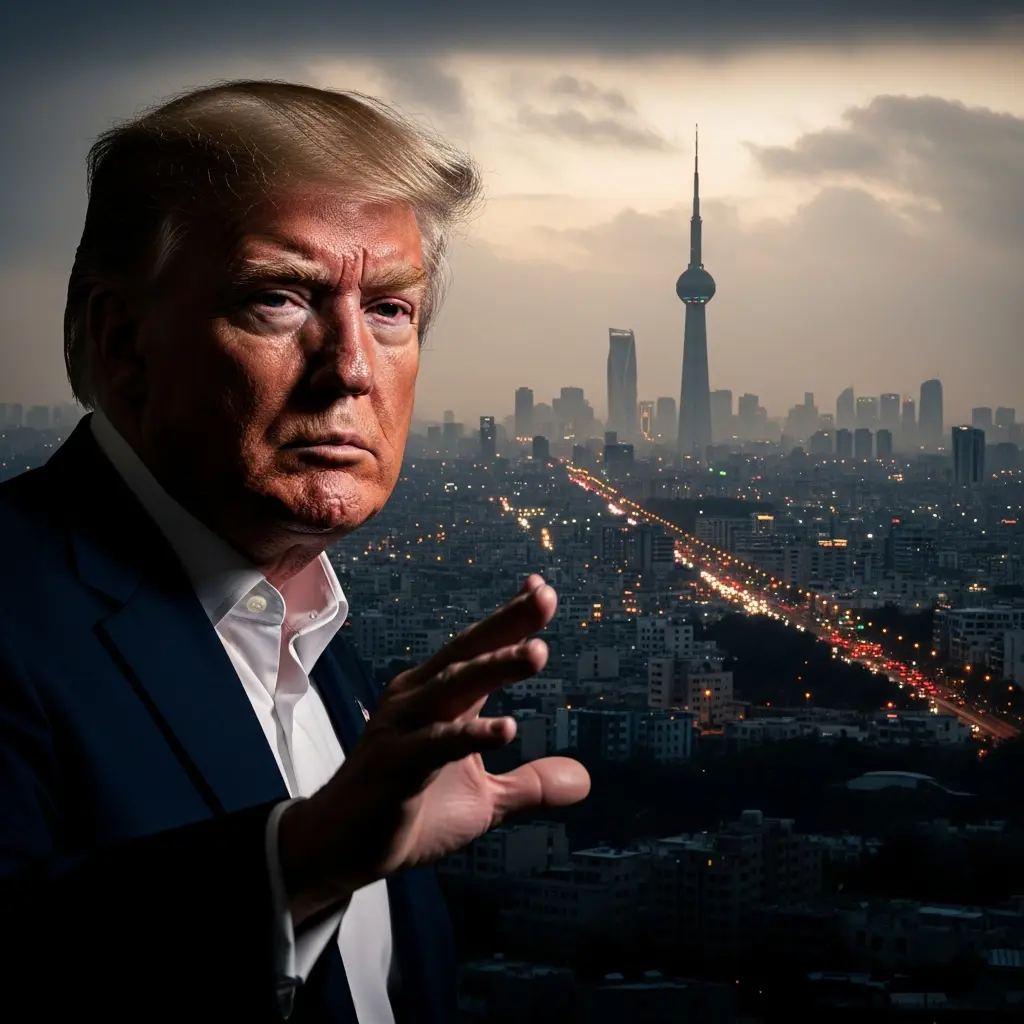
There’s a particular kind of tension that settles over global affairs when the United States and Iran find themselves at the edge of another standoff. It’s familiar by now — sharp words from Washington, defiance from Tehran, nervous glances from capitals in between. But something about this moment feels different. The stakes, analysts say, have rarely been higher.
US President Donald Trump issued one of his most direct warnings yet to the Iranian government this week, making clear that patience in Washington is running thin. “Time is of the essence,” Trump said, in language that left little room for diplomatic ambiguity. The statement came on the heels of a high-profile meeting with Israeli Prime Minister Benjamin Netanyahu, signaling that the two close allies are very much aligned on how to handle the growing threat posed by Iran’s nuclear ambitions.
For anyone watching US-Iran tensions unfold over the past several years, the words weren’t entirely surprising. But the timing — and the context behind them — adds a layer of urgency that shouldn’t be dismissed.
A Negotiation on the Brink
Behind the public warnings lies a more complicated story. Iran nuclear talks between American and Iranian negotiators have reportedly stalled in recent weeks, with Tehran rejecting several proposals put forward by Washington. Among the sticking points, according to people familiar with the discussions, were American demands related to uranium transfer and restrictions on Iran’s ability to enrich nuclear material.
Iran has long maintained that its nuclear program is purely for civilian and energy purposes. The United States and its allies — particularly Israel — have never fully accepted that position, pointing to the pace of Iran’s uranium enrichment and the growing sophistication of its nuclear infrastructure.
The rejection of American proposals is, in many ways, a familiar move in the long chess match between the two nations. But Trump’s public statement this week suggests that the window for negotiation may be closing — and that the administration is preparing to shift its approach if diplomacy continues to falter.
The Netanyahu Factor
The Trump-Netanyahu meeting was never going to be a quiet affair. Israel has always viewed a nuclear-capable Iran as an existential threat, and Netanyahu has been one of the most vocal advocates for aggressive action — diplomatic or otherwise — to prevent Tehran from reaching that threshold.
The fact that Trump’s warning to Iran came so closely on the heels of discussions with the Israeli Prime Minister was not lost on analysts. It suggests a coordinated message, one designed to signal to Tehran that Israel and the United States are not merely watching from the sidelines.
For Netanyahu, who has built much of his political identity around the Iranian threat, the alignment with Trump represents an important moment. And for Iran, the optics of the world’s most powerful military force and the Middle East’s most capable regional military power appearing to move in lockstep is, at the very least, a reason for concern.
What Else Is Going On In The Region
The back and forth between Washington and Tehran is one thing, but the rest of the Middle East is also watching closely.
US-Iran tensions have a way of sending out ripples — affecting proxy fights in Yemen and Syria, altering the calculus for Gulf states, and rattling markets that depend on a steady flow of oil from the region.
Political analysts are already warning that continued escalation could destabilize the wider Middle East. Oil markets, which are deeply sensitive to conflict risk in the Persian Gulf, have begun reflecting some of that anxiety. Any disruption to Iran’s oil exports — or, more dramatically, to shipping lanes in the Strait of Hormuz — would have immediate and significant consequences for energy prices worldwide.
That’s a reality that not only affects the Middle East but touches the daily lives of consumers from Europe to Asia. Gasoline prices, inflation, supply chains — all of it becomes entangled when this particular region tips toward crisis.
A Pattern With No Easy Exit
What makes this moment genuinely difficult is that neither side has an obvious path toward de-escalation that doesn’t involve significant concessions. Iran is unlikely to simply hand over its nuclear leverage without something substantial in return — relief from sanctions, security guarantees, or a broader political agreement that addresses its regional concerns. Washington, particularly under Trump, is equally unlikely to offer that kind of deal without firm and verifiable commitments from Tehran.
So the standoff continues, punctuated by warnings, rejected proposals, and meetings between leaders whose publics expect strength over compromise.
It’s worth remembering that this is not the first time the world has been here. The Iran nuclear talks have collapsed and restarted multiple times over more than two decades. Somehow, catastrophe has been avoided — through luck, diplomacy, or restraint — each time. Whether that pattern holds in this new chapter remains the central question.
The Bottom Line
Trump’s warning to Iran is more than rhetoric. It reflects a genuine frustration within the administration over the pace and direction of nuclear negotiations, a deepening alignment with Israel, and a belief that pressure — not patience — is the right tool for this moment.
What Iran does next will matter enormously. And the world, whether it’s watching oil futures in London or following breaking news in Beirut, will be paying close attention.
Trump Issues Fresh Warning to Iran: What It Means for the Middle East and the World.