Across dusty grain markets and rain-soaked highways, a quiet anger is finding its voice — and it won’t be easy to silence.
There’s a particular kind of frustration that builds slowly in farming communities. It doesn’t erupt overnight. It accumulates across seasons — in unpaid loans, in unsold harvests, in promises that arrive before elections and disappear after them. Right now, that frustration has a new target: the India-US trade deal, and what farmers across the country fear it will do to their already fragile livelihoods.
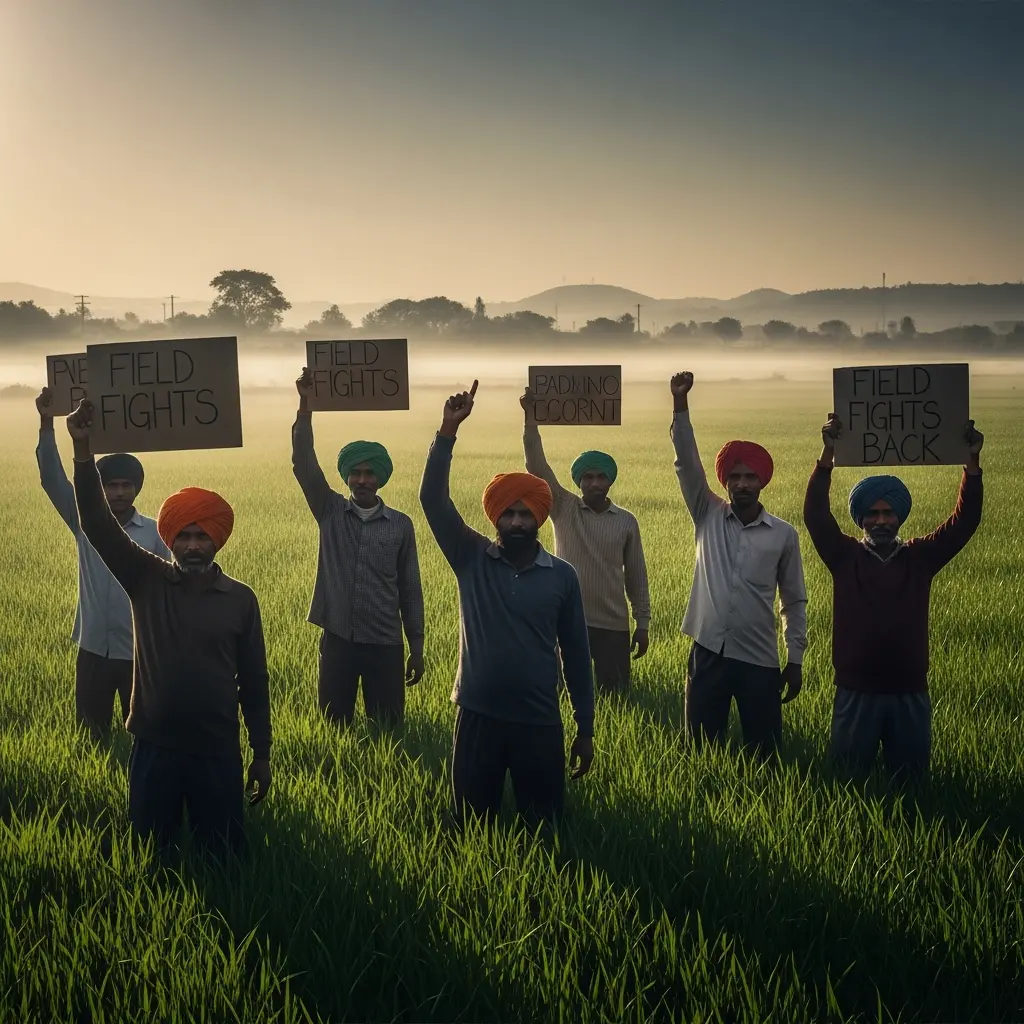
Since early February 2026, the farmers protest in India has grown from a handful of demonstrations in Delhi to a nationwide movement that shows no sign of slowing. A coalition of major trade unions and farmers’ groups mounted a nationwide strike to protest the interim trade deal with the United States, saying the agreement undermines the interests of farmers, small businesses, and workers. By March, the protests had only intensified. Thousands gathered at Ramlila Maidan, demanding a legal guarantee for minimum support prices and asking for agriculture, dairy, and poultry to be kept entirely out of the agreement.
To understand why so many people are marching, you have to understand what this deal represents to the people who grow India’s food.
The Deal on Paper vs. The Deal on the Ground
When the trade agreement between India and the US was first announced, the official framing was optimistic. US tariffs on Indian imports would drop significantly, and both governments spoke of “mutually beneficial cooperation.” For exporters in IT and manufacturing, the news was broadly welcome.
But India’s rural economy runs on different math. The Samyukt Kisan Morcha, which represents 100 farmers’ groups, went so far as to call it a “total surrender” of Indian agriculture to American corporate giants. That language sounds extreme — until you hear what the deal actually contains.
Among the most contested provisions is India’s agreement to allow imports of DDGS — distillers dried grains used in animal feed, largely produced from genetically modified corn in the United States. Farmers say any move to cut duties on soybean oil would make US supplies far more competitive and directly hurt local growers. For states like Haryana, Madhya Pradesh, and Maharashtra, where soybean and oilseed farming sustains entire districts, this isn’t an abstract policy concern. It’s the difference between a viable crop season and another year of debt.
“What will our farmers do if agricultural products are imported at zero duty?” asked Jaikaran Dahiya, a grain farmer from Haryana, at a protest near Jantar Mantar. “This trade deal should be cancelled — it will benefit only American farmers.”
The MSP Question That Won’t Go Away
Woven through the farmers protest India movement is a demand that predates this trade deal by years: a legal guarantee for MSP — the Minimum Support Price for crops. This is the floor price the government pays farmers for their produce, and for millions of growers, it is the single most important financial safety net in existence.
Farmers are pressing for a law guaranteeing minimum crop prices at a time when energy prices are spiking due to the Middle East conflict, adding another hurdle for growers who largely depend on diesel to run equipment like water pumps and threshers. In other words, input costs are rising while farm incomes remain uncertain — and the prospect of cheaper American imports arriving into this already fragile environment feels, to many farmers, like pouring oil on a fire.
Without a legally guaranteed MSP, farmers have no floor. If US grain or oilseed undercuts domestic prices in the open market, Indian farmers simply absorb the loss. There’s no safety net to catch them.
A Movement That Could Grow
In Haryana, farmers under the banner of the Bharatiya Kisan Union held tractor marches through multiple districts, burning copies of the proposed agreement outside local government offices. Farmer leaders there warned that a large “Kisan–Mazdoor Jan Kranti Rally” would be held in Kurukshetra, and that if the government failed to act, protests would expand further across the country.
Rallies went ahead from Punjab to Tamil Nadu, underscoring the national breadth of the challenge facing Prime Minister Modi as he attempts to slash punitive US tariffs while shielding India’s rural economy at the same time. It’s a genuinely difficult balancing act, and no diplomatic language has yet managed to bridge the gap between what the government calls opportunity and what farmers call a threat to their survival.
The agriculture crisis this movement speaks to didn’t begin with the US trade deal — it has been building for decades through consolidating landholdings, volatile commodity prices, insufficient cold chain infrastructure, and climate-driven crop losses. The trade deal hasn’t created the wound. But for many farmers, it feels like it’s being pressed on a wound that hasn’t healed.
What Comes Next
The government has maintained that agriculture was largely protected in the deal’s current framework. Farmer unions have rejected that claim entirely, pointing to provisions on raw cotton, oilseeds, and dairy that they say tell a different story.
What’s clear is that this farmers protest against the India-US trade deal is not a fringe reaction. It draws on deep wells of rural grievance — over MSP, over food security, over who gets to benefit when two powerful economies negotiate. As one analyst noted, cheaper imports might ease food inflation in cities, but they come with significant trade-offs: displaced domestic production, weakened rural incomes, and reduced export competitiveness in sectors that millions of farming households depend upon.
India’s farmers have marched before. They have sat at borders through winters, endured ridicule, and ultimately extracted concessions from a government that underestimated their resolve. The question this time isn’t whether they’re serious. It’s whether anyone in power is listening closely enough to act before the movement grows beyond easy negotiation.
The fields are sending a message. Whether Delhi receives it clearly enough, and soon enough, remains to be seen.